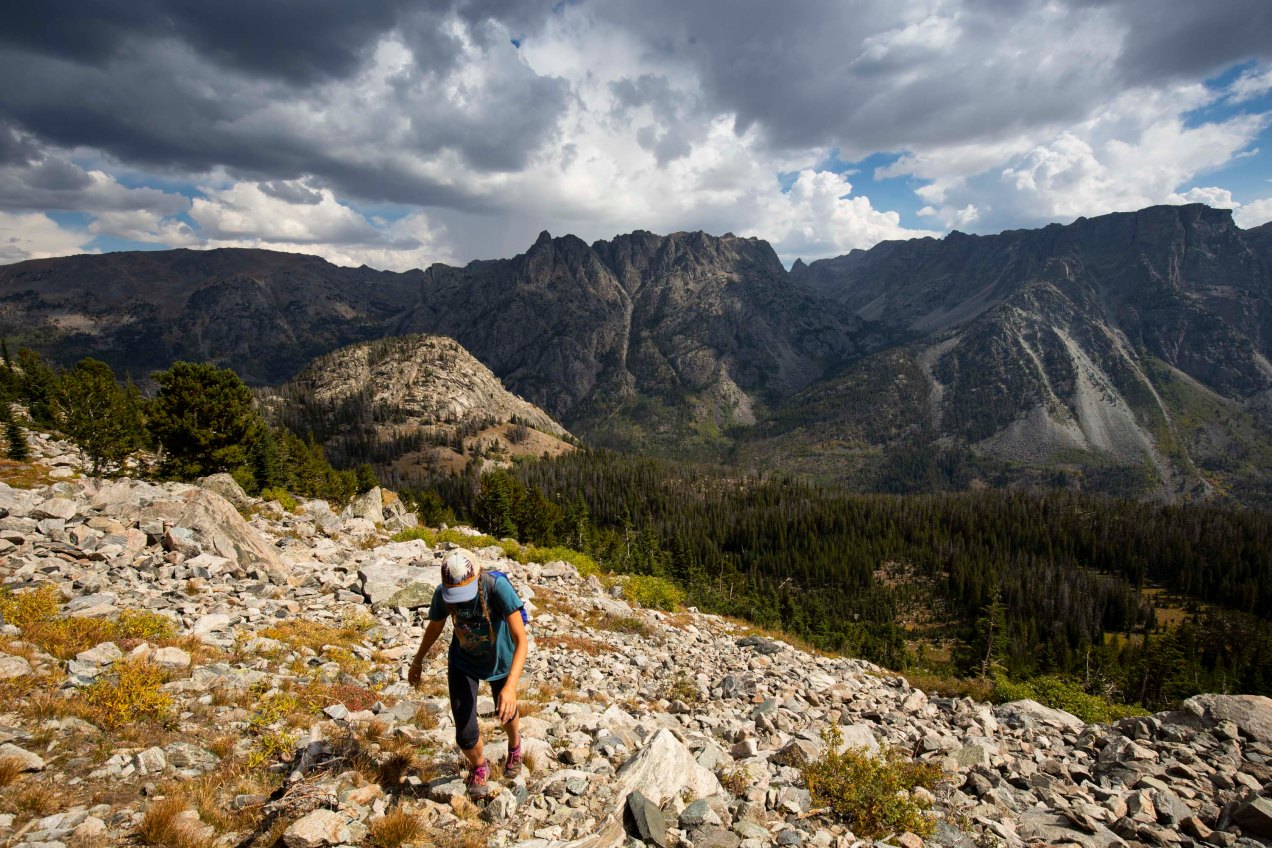
photography, random thought, travel

INTO THE WINDS (Part 2)

Continued from Into The Winds (Part 1)

We arrived just as our friends were tying up their horses.

They came with gifts. Gifts of glorious food.

One of the things that inevitably occurs when backpacking is that you begin to fantasize about certain foods that you couldn’t possibly take with you into the backcountry. It may sound nuts, but Ellen was dreaming about fresh salad. I know, I know, let me explain. Nothing you take in a backpack with you is fresh. Most of it is high sodium, high protein, processed energy foods. And as we all know, when you know can’t have something, it tends to gnaw at you.

Ellen couldn’t imagine anything better than a fresh salad. Not even pizza.

Spoiler alert. They brought Ellen a huge, fresh salad in tupperware. Me? Oh yeah, they brought me some goodies too. Fried chicken and skittles. No, it’s not autocorrect. You read that right; fried chicken and skittles. And it was glorious. Not together, of course.

Oh, also beer and cookies…
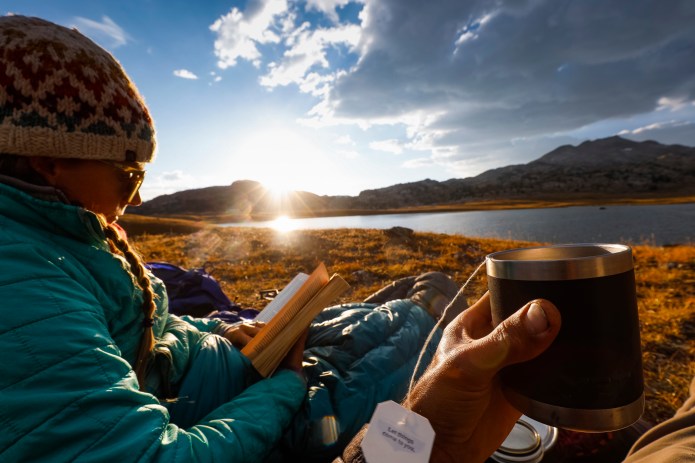
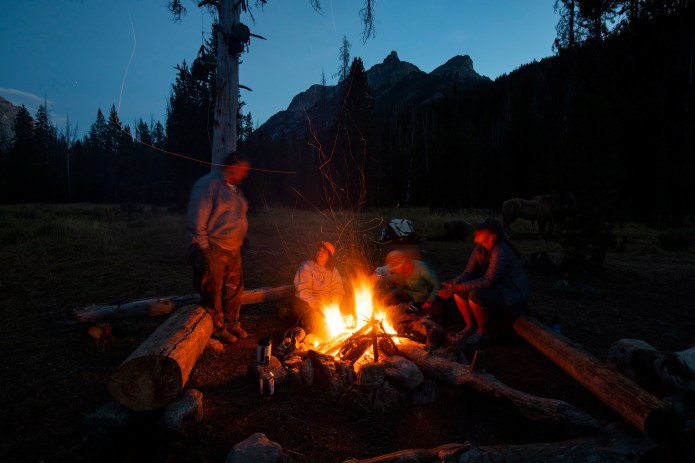
We gorged and laughed with our friends all afternoon, smelly as we were. It was a real treat. In the evening light, our friends saddled up and headed back to town. The next morning, happy and with full stomachs, Ellen and I repacked our packs and hit the trail again. We were energized from all of the calories and conversation, but our packs were the heaviest they’d been that entire week.

And we still had 50 miles to go.

I had resolved that we were going to finish this hike together, come hell or high water. My shin would get to feeling a little better every morning, but by the end of a 10 mile day, it felt as though it were still day 2. We rationed the ibuprofen so I could sleep, and made the decision to keep pressing on.

My shin seared with the pain of a newly 50+ lb. pack. Thankfully, I had peppered in a few “day hike/ rest days” in to the 12 day trek. It was unfortunate, but I really did need to stay put and rest on those days.

It’s funny how difficult it was for us to chose to actually rest on those days. I felt a bit like a failure. I think our culture dictates a “never slow down” work ethic, and it’s done great things for our society’s productivity. But there’s something to say about the fact that even the Lord took a day to rest… just sayin’.
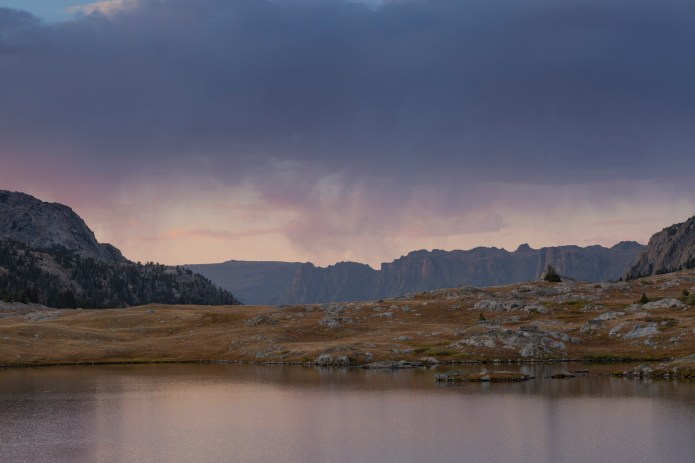
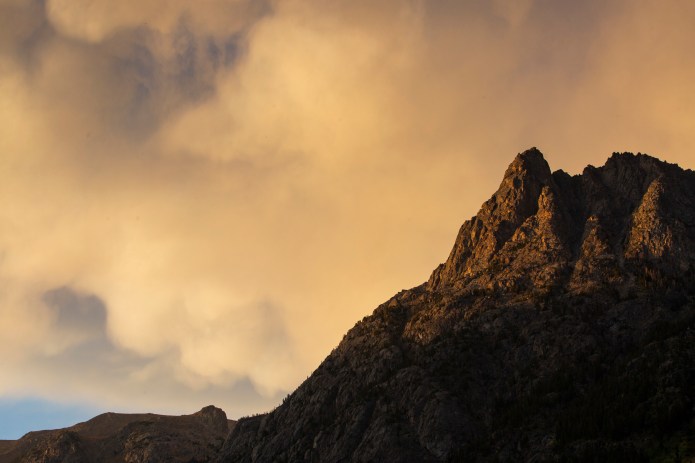
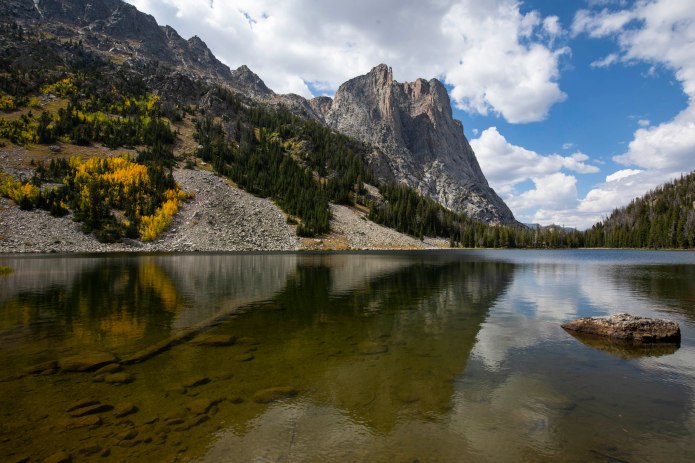
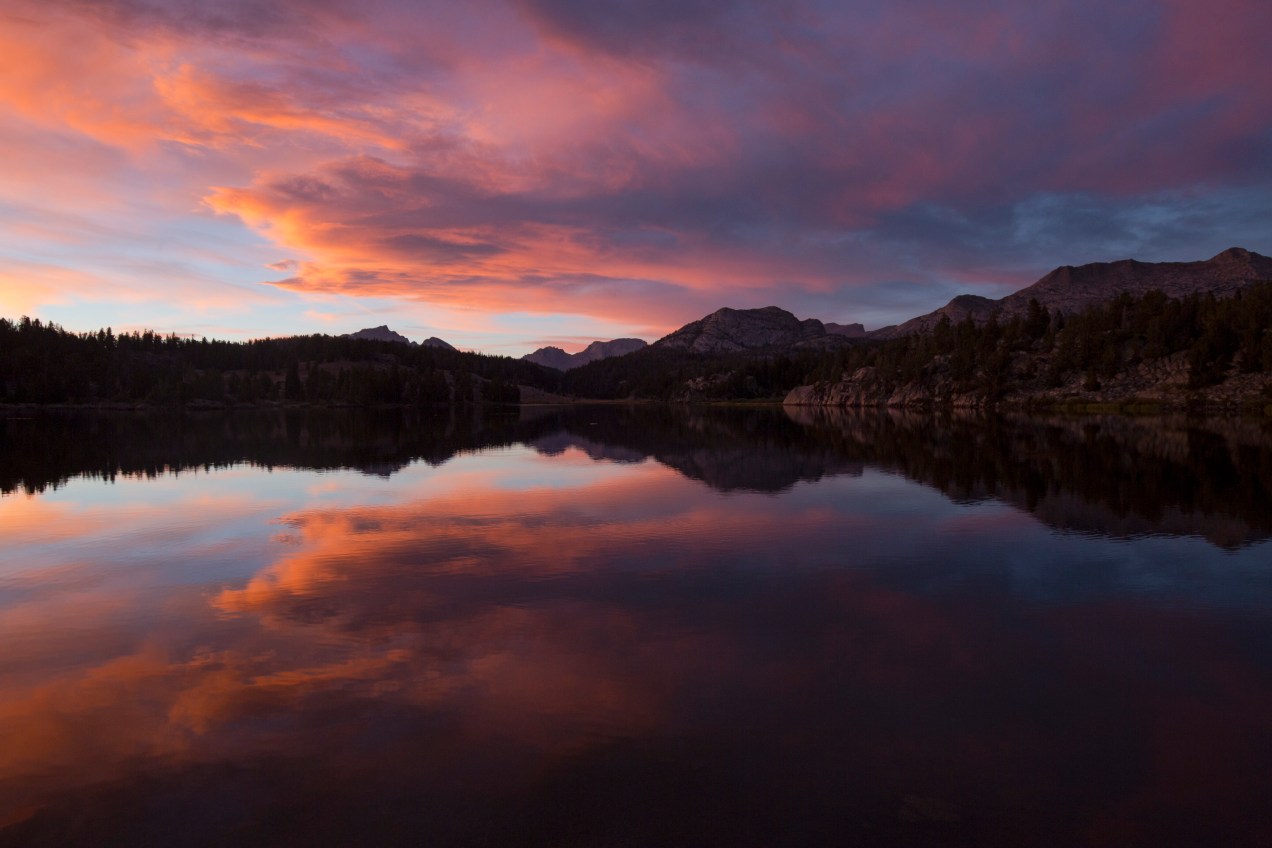
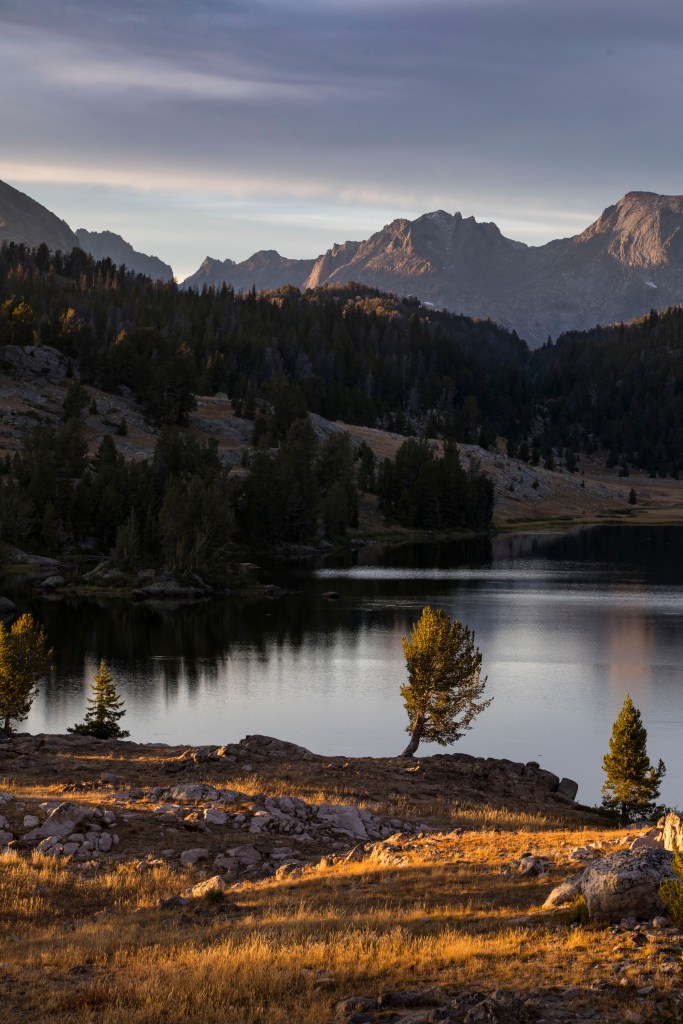
As we continued, we reached the high country. Towering spines of granite surrounded us, majestic and mighty. I spent my mornings and evenings wandering and photographing… not far from camp, just enough to change my perspective of the gray monoliths and reflective lakes. The clouds passed overhead without notice of us or our affairs.

With each day dawning, it was getting a little bit cooler. The mornings brought dew, and then ice to our tent and packs. The willows were fading from bright green to golden yellow.
One of the main things that I took away from this trip is that I’m not getting any younger. It is of utmost importance that I take great care of myself. Gone are the days of eating junk and somehow still feeling great. Gone are the days of taking a fall, and simply brushing myself off, unscathed.

I’m certainly not old by most standards, but as I approach 40, I’m realizing that the lifestyle I love will take more and more work to maintain.

As someone who is always up for a challenge, I welcome this new realization.
I remember sitting at my grandparent’s kitchen table as a young teen. My Papa sitting across from me and Nana making a sandwich for me, on a summer afternoon of mowing the lawn for them. “I can’t wait to be older. How fun will it be to say ‘I remember 20 years ago when X happened. Ah, those were the days!’” I mused. They looked at me smiling, glancing back at each other with a seemingly secret wisdom. At least secret to me.

Well, I may only be pushing 40. And I may be in arguably the best shape of my life. But now, I really can say that I remember 30 years ago, sitting at my grandparents kitchen table, admiring the passage of time. It feels good. Even with the aches and pains, weak shins and sore back.
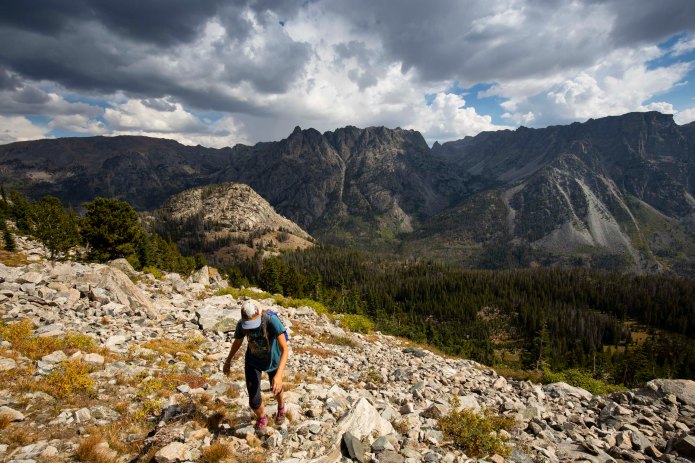
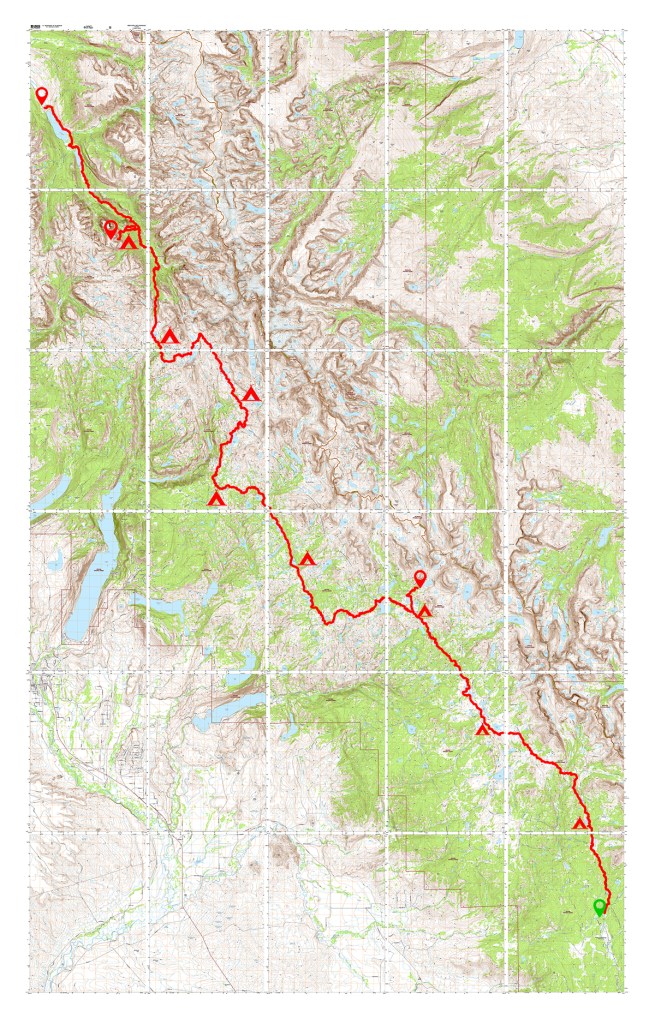
We arrived at the Green River Lakes trailhead, where our truck had been delivered just days before. We were relieved to be done, but in a strange way, a little sad that it was over. A decade and a half of planning paid off, but all that time was suddenly cashed in. The reward was knowing that we could do something this grand and exciting, and that made us both happy and proud.

Into the Winds also reiterated the point that we would be doing this again. And other treks like it. No matter how many years we have under our belts.
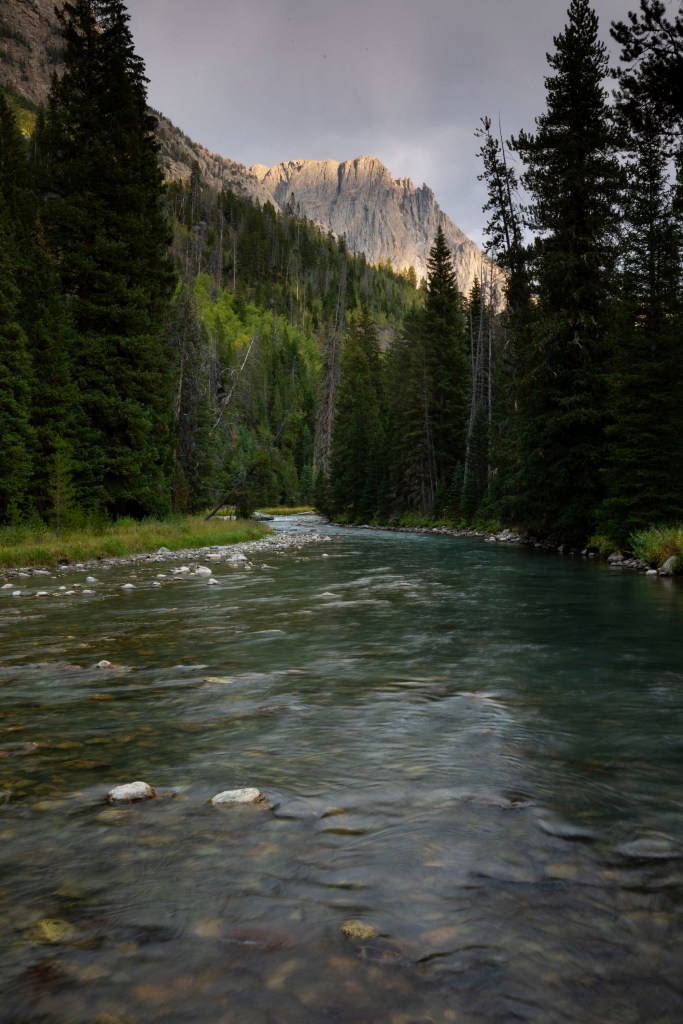
Aches and pains will come and go, but there are few experiences like waking up to a fresh dawn in deep in the wilderness. And that’s worth all the struggle and work.

— Andrew


Ellen and I hit the road full-time in June of 2016. We are on a mission to inspire and educate everyone on the importance of getting outside. Check out my workshops and my prints, made #ontheroad in my mobile print studio. The revenue will help propel us further on this great adventure. Enrich yourself and others… and feel great about it too as you’re helping to ensure our public lands are cherished and to keep the wild spirit of the American Dream alive. Our goal is to visit all 59 National Parks in 3-5 years. LEARN MORE ABOUT WHAT WE’RE DOING HERE


Want to learn photography and enjoy a guided experience? Check out my exciting, NEW workshop dates:
 
EVERGLADES // WINTER // LANDSCAPES + WILDLIFE
BIG BEND// LANDSCAPE + THE ART OF SEEING
 
I’m excited to announce my “The Photographic Guide to Our National Parks” series of eBooks:
 
Rocky Mountain National Park
Grand Teton National Park
 
If you are interested in purchasing a “print from the road”, please check my prints for sale, or email me directly for a custom request:
 
Andrew Slaton // prints from the road
 
If you are interested in licensing any of the images/ video from this post, please visit my stock agency:
 
Tandem Stills + Motion // Andrew R. Slaton
  
For assignment work requests, please email me: andrew@andrewslatonphoto.com
 
Thanks for visiting AndrewSlatonBlog.com!
 
All images and content © ARS Media, LLC 2018
 
Standard
photography, random thought, travel

INTO THE WINDS (Part 1)

Nearly 15 years ago on Valentines Day, I rolled into Pinedale, WY on frozen streets. Who knew I would fall head over heels for this area at the time? But I did. In spite of the -40 degree winter temps.

It was my first “real” job after college, working for a small weekly newspaper at the foot of the Wind River Range. It didn’t take long before I met and interviewed a guy in town who had just come back from a pack trip spanning the entire 100 mile long range. I became obsessed with the idea of this trek.

Fast forward 10 or so years, and Ellen and I began seriously discussing the project we were now calling “Into The Winds.” A journey through some of the lower 48’s most spectacular wilderness. At the time, we had almost none of the gear that a hike of this magnitude would require, and our dog, Hunter Trek, a small, 11 year old, city beagle, was not exactly the best canine for an adventure like this. We also lived in Dallas, so we would need to drive 20+ hours, spend a week getting acclimated, and then another two weeks on the trail… it just simply wasn’t practical.

Life on the road has created opportunities for us where before there were only obstacles. In this case, the fact that we tend to base ourselves at the foot of the Winds most summers buried one of our biggest obstacles right away. Likewise, we are in the best shape of our lives because of our healthy lifestyle of eating clean and hiking almost daily. 

The other main road-block was the gear. Since we hit the road, several of the top gear companies have invested in our adventures by trading stuff for photos. I generally don’t like to do that, because let’s face it, gear doesn’t feed us or keep gas in the tank. But if I’m being honest, certain gear is just as good as cash to us.

As for the dog issue, our wonderful Hunter Trek lived a long, happy life, and passed away just 6 months before we hit the road, at which point we brought home our Islay Blue. Skye Blue came along a year later, when we realized that Aussies were the perfect breed for our lifestyle. Energetic and happy, adaptable and strong, and subsequently the best trail dogs a human could ever want.

So in 2018, everything came together to make our Wind River traverse a reality.

We set off on a bright, warm day from Big Sandy, a trailhead of increasing exposure and popularity in recent years, at the southern end of the range. It was late August. The night before brought freezing temps and snow to the mountains, so we were prepared for the worst.

Remarkably, the weather would hold steady for us the entire 12 days. However, on day 2, I fell, landing face first on my camera, busting my lip wide open, and worse, severely bruising my shin. Thankfully, my 5D MK IV with the L series 16-35mm sense attached seemed to still function just fine. I find Canon equipment to be very resistant to my clumsiness.

So from then on, only 16 miles into our 96 mile trek, I would have a persistent sharp pain coursing up my left leg every time I took a step. Honestly, until day 6, I was fearful that I may have to bail out on the whole trip.

Other than the minor injury, the adventure was going wonderfully. We were averaging 8-10 miles a day and seeing incredible country. The girls (our two Aussies) were having a blast, and Ellen was feeling her best ever.

When we weren’t hiking, we spent our days at camp watching the clouds pass, listening to the wind through the trees, and playing fetch in the myriad lakes with the dogs. It was idyllic.

Day 6 was resupply day. And just in case you were wondering, carrying 12 days worth of food and supplies is nearly impossible, unless you are an ultra-light hiker, which we are not. So we split up the supplies into manageable 6 day rations. The day before we set off, we made an 11 mile round trip supply drop to our proposed day 6 camp, hanging the rations high in a lodgepole pine to keep the critters from stealing our lifeline.

Doing a longer trek like this gave us a window into the joy one feels on a resupply day. Before this, the longest hike either of us had done was my week long, 60 mile traverse in Colorado’s Weminuche Wilderness many moons ago. No resupply needed.

So on resupply day, we were especially giddy. Our best friends in Wyoming were planning to ride their horses in to meet us. We were excited to see them and to have a fresh new pantry of food on which to gorge.

To Be Continued…


Ellen and I hit the road full-time in June of 2016. We are on a mission to inspire and educate everyone on the importance of getting outside. Check out my workshops and my prints, made #ontheroad in my mobile print studio. The revenue will help propel us further on this great adventure. Enrich yourself and others… and feel great about it too as you’re helping to ensure our public lands are cherished and to keep the wild spirit of the American Dream alive. Our goal is to visit all 59 National Parks in 3-5 years. LEARN MORE ABOUT WHAT WE’RE DOING HERE


Want to learn photography and enjoy a guided experience? Check out my exciting, NEW workshop dates:
 
EVERGLADES // WINTER // LANDSCAPES + WILDLIFE
BIG BEND// LANDSCAPE + THE ART OF SEEING
 
I’m excited to announce my “The Photographic Guide to Our National Parks” series of eBooks:
 
Rocky Mountain National Park
Grand Teton National Park
 
If you are interested in purchasing a “print from the road”, please check my prints for sale, or email me directly for a custom request:
 
Andrew R. Slaton // prints from the road
 
If you are interested in licensing any of the images/ video from this post, please visit my stock agency:
 
Tandem Stills + Motion // Andrew R. Slaton
  
For assignment work requests, please email me: andrew@andrewslatonphoto.com
 
Thanks for visiting AndrewSlatonBlog.com!
 
All images and content © ARS Media, LLC 2018
 
Standard
random thought, wildlife

Delisting Grizzlies | Ensuring A Species’ Survival

The Endangered Species Act (ESA) is intended to lead to recovery and delisting, so long as adequate plans exist to assure recovery continues.

The ESA requires that the U.S. Fish and Wildlife Service prepare a recovery plan for species that are listed as threatened or endangered. For many years now, all of the recovery criteria established for Yellowstone grizzlies have been met or exceeded.”

— The National Wildlife Federation

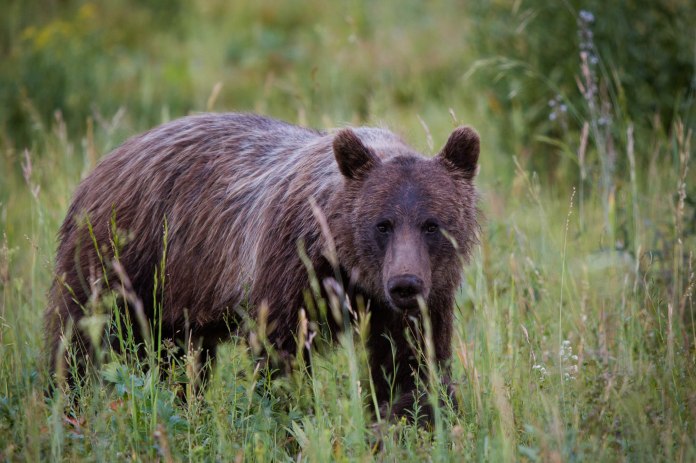
Let me first state a fact: I am not a hunter. Nor do I have any desire to ever hunt bears, for any reason. I love bears more than any other creature on this planet… second only to dogs and (possibly) humans. I deeply care about their survival. And as a consequence, I have thought much about and researched extensively the best paths to ensuring their survival in the lower 48.

IMG_7989

But let me be clear; I am not an environmentalist. I am a conservationist. The former, I believe, is responsible for gross mismanagement of our wild places for far too long and leads to a mentality of “playing God” in places like Yellowstone.

Even though I personally do not hunt, I respect those that do. Especially and specifically when they responsibly use the whole animal for meat, clothing, etc. But there are a few other purposes that hunting serves, that many of us city-folk and academic types forget; non-human species are safer when they maintain a healthy fear of humans, and we humans, as the apex of all apex predators, are tasked with managing and keeping animal populations healthy. And sometimes that includes hunting for culling purposes.

According to Nick Gevock, an opinion columnist for High Country News, “It is true that such management might well include hunting… look at the remarkable track record of species that are currently hunted: Nearly every species of wildlife that hunters value has thrived in our country, and with sound scientific management, grizzlies can do the same, and even grow in both numbers and range. It’s difficult for many non-hunters to understand, but it’s a solution that works in Alaska with brown bears and can work in the Lower 48 as well.” He goes on to cite a study conducted by the Alaska Department of Fish and Game, “In fact, a study of four brown bear populations in Alaska — two populations in national parks that were not hunted and two adjoining populations that are — found that the hunted bears had larger litter sizes and better cub survival.”

IMG_7980

I find trophy hunting wasteful. On a personal level, I do not understand the appeal. But let’s look at the facts:

1. Hunters are typically some of the best conservationists on the planet.The US Fish & Wildlife Services states “The sale of hunting licenses, tags, and stamps is the primary source of funding for most state wildlife conservation efforts.” It goes on to say, “By respecting seasons and limits, purchasing all required licenses, and paying federal excise taxes on hunting equipment and ammunition, individual hunters make a big contribution towards ensuring the future of many species of wildlife and habitat for the future. By paying the Federal excise tax on hunting equipment, hunters are contributing hundreds of millions of dollars for conservation programs that benefit many wildlife species, both hunted and non- hunted. Each year, nearly $200 million in hunters’ federal excise taxes are distributed to State agencies to support wildlife management programs, the purchase of lands open to hunters, and hunter education and safety classes.” But more than just their tax dollars speaking loudly, hunters are also members of “local hunting clubs and national conservation organizations work to protect the future of wildlife by setting aside thousands of acres of habitat and speaking up for conservation in our national and state capitals.”

2. Hunting is very big business. According to the California Department of Fish and Wildlife “Hunting is much more than a traditional American pastime. It creates more than 700,000 jobs nationwide. New studies now show that annual spending by America’s 14 million hunters amounts to $22.1 billion. By comparison, and if hypothetically ranked as a ‘corporation,’ that revenue figure would put hunting in thirty-fifth place on the Fortune 500 list of America’s largest businesses, right between J.C. Penney and United Parcel Service.” This pumps much needed resources directly into local economies and important conservation/ research efforts. So whether you agree with hunting or not, it is a vitally important part of the conservation economy.

3. Humans are an important species within the world ecosystems. Environmentalism paints the picture that humans are the main problem with the environment, which in some respects may hold some truth. However, the movement is largely based on the mediocracy principle, essentially stating that humans are mediocre and no more special, exceptional, or superior to any other species. The movement has many well-meaning individuals who truly care about the natural world, but unfortunately this whole premise is flawed. Clearly humans are the dominant species, and I could argue are quite exceptional, special, and superior. This does not mean we are the “center of the universe” or the only species that matters, or that we should destroy the planet or leave other species decimated. It is not an either/ or. Therein lies the biggest fallacy. To many environmentalists, the choice is either to be on the side that is hell bent on destruction, or to consider ourselves no different from a dung beetle and therefore refuse logic and common sense policies. There is middle ground. It is called stewardship and conservation.

4. The Greater Yellowstone ecosystem includes a massive swath of land (nearly 6 million acres) that is much more than just Grand Teton and Yellowstone National Parks. Ranchers and others’ livelihoods depend on the bear’s fear of human conflict. They no longer fear people. A study in the 1990’s by Jon Swenson, Department of Biology and Nature Conservation at The Agricultural University of Norway (to read the full study, click here) observes in general that bears are more likely to avoid humans in areas where they are hunted than where they are fully protected. What makes things complicated is the availability of food when humans are present. Food storage and proper disposal is still a major issue in bear areas, regardless of hunting. A major rebuttal to the argument that hunting creates more fear in bears of humans is that there is no scientific evidence to support this claim. However, there is quite a lot of observational evidence dating all the way back to the 16th century in Eurasia to support the assertion, and so far, none to suggest that bears would somehow fear humans less or the same from if hunted. The responsibility is on us to be realistic, finding a way to coexist with less human-bear conflict which in the long run will help protect the species.

5. After delisting, grizzly bears will remain protected in the 3 National Parks they call home, and under special regulations in the surrounding states’ National Forests and designated Wilderness Areas. Hunting seasons and quotas will be limited and determined by biologists and conservationists projections, updated yearly to reflect proper wildlife management, just as they do with elk, deer, moose, black bear, big horn sheep, etc.

Anyone who spends much time in grizzly country, especially hunters, know that an unfortunately large segment of these bears have grown to associate humans with easy food. When an elk hunter fires his rifle in grizzly country, he/ she knows that it is only a matter of time before a bear will show up. This is potentially the exact opposite of what we might have after a few generations of bears that experience being the prey of (now) predator humans. They will try to get as far away from gunshots as possible. See the aforementioned Swenson Study.

This very simple fact could save dozens of bears lives every year that otherwise would get into conflicts with humans because they lack any fear of us. And we all know that the bear loses when it gets into human conflict. Protocol is usually to relocate the “problem” bear first, or to dispatch (kill) it. The fact is, the government killed 31 grizzly bears in 2015, for various reasons, mostly due to human-bear conflict. Could these numbers be lower (or at least the same) with the introduction of a very limited-tag trophy hunt scenario?

ARS_WY_0710_0031

According to Chris Servheen, Grizzly Bear Recovery Coordinator for the U.S. Fish and Wildlife Service (USFWS), “the bears have met every criteria set in a recovery plan to have them removed from the Endangered Species List, or ‘delisted.'” If delisted, grizzlies would no longer be protected under the stricter Endangered Species Act (ESA) regulations, and would be managed by the six surrounding National Forests and to the states of Idaho, Montana, and Wyoming. The populations inside Grand Teton, Yellowstone, and Glacier National Parks would still be highly protected and managed by the National Park Service. If you would like to read the entire ESA, it is available as a pdf here.

Defenders of Wildlife, an organization who “is dedicated to the protection of all native animals and plants in their natural communities,” states, “Today, there are an estimated 1,800 grizzly bears remaining in five populations in the lower 48 states. Most of these bears are located in the Northern Continental Divide Population (including Glacier National Park) and the Yellowstone Population.” That includes the conservative estimate of 700+ in the Greater Yellowstone area.

Many conservation biologists argue against delisting, stating that it isn’t enough to protect grizzly bears if their habitat isn’t protected as well. Servheen counters that “the Service looks at more than raw numbers for delisting, including the present or threatened destruction or curtailment of bear habitat or range; overuse of habitat for commercial, recreational, scientific or educational purposes; disease or predation; the lack or inadequacy of regulations; and other natural or manmade factors affecting the population’s continued existence.”

“The key to success is adaptive management,” said Servheen. “As conditions and the needs of the bears change over time, management can change to address those needs,” he said. “I’m optimistic that the bears will be around for hundreds of years. All three state plans are good,” Servheen said, “and don’t have the political problems that have afflicted the ESA delisting plan for wolves.”

IMG_7986

So what does all of this mean for these magnificent bears? Well, it means great news; grizzly bears in the lower 48 have made a remarkable recovery, thanks to the Endangered Species Act. It is a “huge conservation success story“, But it doesn’t mean they are out of the proverbial “woods.”

The states of Montana, Idaho, and Wyoming have already stepped up to create comprehensive plans to manage the grizzly bear populations and to protect them from a return to the ‘threatened’ status. What this all comes down to is ensuring that bears have adequate and sufficient habitat within which to roam and avoid dangerous human contact.

I simply want to start a dialogue here that is somewhere in between the two extremes. Anyone can say what they want about me, but my main concern is the great bear’s long term survival, and to me, that means less human-bear conflict.

From where I stand, I see two main groups that are on polar opposite sides, unwilling to meet somewhere in the middle to find a balance between what is right and good for bears, and what is reasonable and fair for humans. It doesn’t have to be that way. It is possible to ensure the survival (and thriving) of this magnificent creature, all the while, managing it’s territory and population to ensure the safety and livelihood of the people who live within the massive boundaries of the Greater Yellowstone Ecosystem.

I readily admit that I do not have all the answers. Neither do you or anyone else, but I invite you to share your thoughts and feelings here, in hopes that we can come to understand each other and work toward a common goal: protecting a true symbol of the wild, and maintaining a healthy grizzly bear population, for generations to come.

— Andrew


Ellen and I have hit the road full-time! Help us on our mission to inspire and educate everyone on the importance of getting outside by checking out my workshops and my prints, made #ontheroad in my mobile print studio. The revenue will help propel us further and further on this great adventure. Enrich yourself and others… and feel great about it too as you’re helping to ensure our wild lands are cherished and to keep the wild spirit of the American Dream alive. Our goal is to visit all 59 National Parks in 2-4 years. LEARN MORE ABOUT WHAT WE’RE DOING HERE


Want to learn photography and enjoy a guided experience? Check out my exciting, NEW workshop dates:
 
TELLURIDE // LANDSCAPE + MOUNTAIN LIGHT // 2016 – SOLD OUT
TELLURIDE // LANDSCAPE + MOUNTAIN LIGHT (Trip 2) // 2016 – ONLY 2 SPOTS AVAILABLE
LOCAL + PRIVATE WORKSHOP // 2016 – AFFORDABLE RATES FOR ME TO COME TO YOU
BIG BEND // LANDSCAPE + NIGHT SKY // 2017 – MOST POPULAR! 6 SPOTS AVAILABLE
LEARN PHOTO + CAMERA BASICS // DALLAS // 2016 – 20 SPOTS!
 
I’m excited to announce my “The Photographic Guide to Our National Parks” series of eBooks:
 
See what’s NEW
 
If you are interested in purchasing a “print from the road”, please check my prints for sale, or email me directly for a custom request:
 
Andrew R. Slaton | photographer // prints
 
If you are interested in licensing any of the images/ video from this post, please visit my stock agency:
 
Tandem Stills + Motion // Andrew R. Slaton
Image Brief // Andrew R. Slaton
  
For assignment work requests, please email me: andrew@andrewslatonphoto.com
 
Thanks for visiting AndrewSlatonBlog.com!
 
all images and content © ARS Media, LLC 2016
Standard
photography, travel

#findyourpark | GRAND TETON

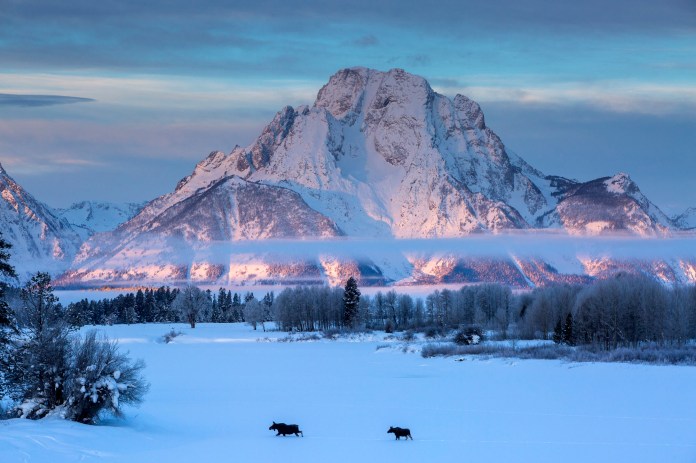
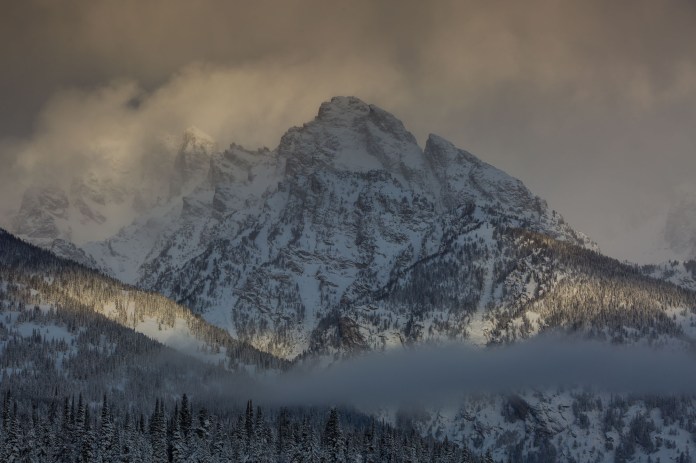
Where to begin?? Grand Teton National Park is one of the most magnificent 310,000 acres in all of North America. If there were ever a “bucket list” National Park… this is it.

I first laid eyes on the Teton Range, for which the park is named, nearly 15 years ago. It was sincerely love at first sight. But even more than that, there is a feeling of wildness I have never experienced anywhere else. I’ve spent years exploring the Colorado and New Mexico section of the Rockies, but there’s something quite different when you enter a land where the ultimate spirits of the West still resides; the grizzly bear and wolf.

ARS_WY_20160122_1178

ARS_WY_20160122_1187

I have literally thousands of images from this awe-inspiring park, but I’m going to show only new images from my most recent trip in February. You can view every season in the park in this blog’s archive search bar to the right… just type “Tetons”.

When To Go

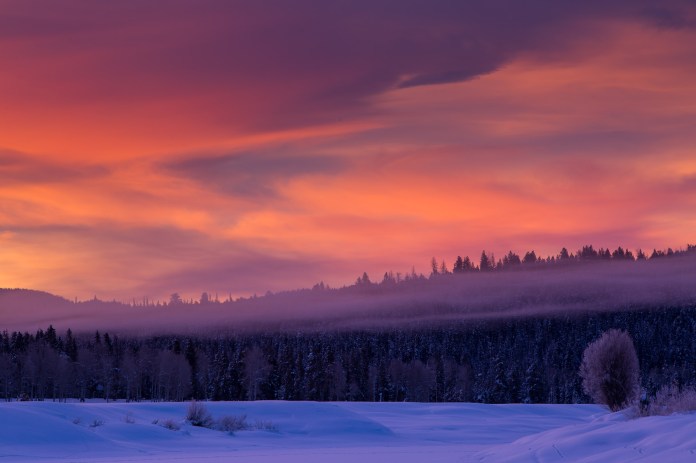
So which season is the best to visit, you might be thinking? Well, each is unique and beautiful and they have their own benefits: winter is haunting and quiet. Now, yes, it’s freaking cold too. Like, you could die if you’re not prepared kind of cold. It can reach temps of -50 degrees F in this part of Wyoming, so be prepared with layer after layer. But you will never see such amazing sunsets and sunrises as you will in the winter. And the crowds are few and far between. It’s my second favorite time of year.

My first is fall…. swoon. Fall is absolutely magnificent. The summer crowds begin to dissipate, the animals get energized for mating season, the leaves catch fire with color, the air gets a biting chill and the first snowfall hits. It’s just amazing. And… the mosquitos are mostly gone. Which brings me to summer :)

Summer is beautiful. Warmer temps, animals abounding… but so are the mosquitos and crowds. Don’t get me wrong, summer is fantastic. I just tend toward avoiding crowds in my special places of mountain goodness.

Now spring is a bit tricky. Locals call it “the muddy season,” and for very good reason. After the massive amounts of snow melt, the ground is super muddy for at least 1-2 months. Usually May and June are like this. And if you’re wanting to get up the high country, there’s way too much snow still until July. But even this time of year is pretty… deep greens and blues abound and wildflowers begin to bloom. And the masses have not yet begun to descend on the area for the summer season.

Each season has it’s benefits and pitfalls, so carefully look at the pros and cons and choose the right time for your trip that fits your expectations.

ARS_WY_20160122_1202

Where To Stay

Grand Teton National Park is right outside of the town of Jackson, Wyoming. So if camping isn’t your thing, there are plenty of hotels, motels, hostels, and even dude ranches in the area at which to stay. If you’re a camper like me, you’ll be overjoyed to find that most of the park borders National Forest, so cheap and/ or free camping is everywhere. There are just a few developed campsites in the park, and to be honest, I’ve never stayed at any of them… because… honestly… if you’re camping, why would you want to be right next to other people AND have to pay too much ($22/ night) for it? I dunno… call me crazy. But if you like that sort of thing, here’s the info you need.

ARS_WY_20160122_1251

How To Get There

Luckily, even though small, Jackson, Wyoming has a decent sized airport (JAC) with many flights coming in and out daily. It can be pricey though, depending on what time of year you’re flying and where you’re flying from. Salt Lake City, Utah (SLC) is probably the closest, cheapest international airport and is about a 4.5-5 hour drive. But you may save a ton of $ flying and driving from SLC, so check it out if your a budget traveler like me. Keep in mind though when renting a car, if you’re planning to travel here in anything but summer, you may want an SUV or even better, 4 wheel drive. The mud in the spring and snow in the winter and fall can be treacherous. It is not uncommon, even among locals, to get stuck in the ditch. Just be prepared. It’s even nice to have in the summer too.

SLC has a ton of Subarus for rent, which I would recommend for the price and abilities. AWD but decent gas mileage. Not too shabby.

If you’re driving the whole way, be prepared for immense beauty and abundant wildlife as you get within 250 miles on any side of the park. You may want to spend some time working your way to GTNP to see all of the beauty the surrounding land has to offer. Be very careful and alert if driving in the area at night. It is common to see (very large) animals crossing roadways, and it could ruin your day (or life) to hit one.

ARS_WY_20160122_1276

What To Do

Oh my, I could go on and on here, but I’ll try to keep it brief…

First thing’s first; bordering to the North of Grand Teton Park is of course America’s first and most famous National Park, Yellowstone. So you’re going to want to devote a few days to this amazing landscape. But we’re not here to talk Yellowstone just yet… that’s for another post.

Hiking, backpacking, climbing, fishing, rafting, skiing, photography, snowshoeing, wildlife viewing, camping, exploring, and so much more are all fantastic activities to see/ do in this park. But bring your A game. This park is rugged and wild.

Wildlife

Since wolves, mountain lion, and grizzlies have made a comeback, there is more to think about when you’re out there than just what’s for lunch. The chances of any kind of attack are so slim, however, for your safety and the animals, there are a few things you’ll want to know. Check out the GTNP website here for great safety tips.

It is pretty common to see bison, elk, deer, moose, coyote, eagle, hawk, fox, and more. Then, if you’re lucky, you may see wolf, bear (black and grizzly), mountain lion, mountain goat, big horn sheep, etc. Keep a very safe distance with all of these animals… they are wild. And as scary as bears, lions, and wolves sound, more people are killed by bison every year! Please treat the animals with respect.

ARS_WY_20160122_1372-2

And if you’re out hiking or backpacking, please respect this beautiful park and practice Leave No Trace Ethics. If you are not familiar, please click the link and read more about it… but the gist is, leave a place as good or better than you found it. It’s a rule that I wholeheartedly use and endorse.

But don’t worry, LNT doesn’t apply to making snow angels :)

ARS_WY_20160122_1474

And that brings me to my next important “to do”… have fun and make memories! This place is one of the most special places in the world, much less the U.S. It is meant to be cherished, respected, AND enjoyed. So please, go with your family and friends, teach them about how to protect it, and then make some killer memories in Grand Teton National Park.

ARS_WY_20160122_1535

ARS_WY_20160123_1475

ARS_WY_20160123_1628

What to See

Just like most, if not all, of our Parks, there are several very famous spots, and for good reason. These places are amazingly gorgeous and oh so special.

Since like the rest of my #FindYourPark posts, this is simply an introduction, and by no means a comprehensive guide, I will only mention a few of my favorite spots. I’ll leave the rest up to you… And if you’re really interested in a guided experience, and you’d like to see all of my favorite secret spots, come with me this summer or fall!

The main ones, that are easy to get to and I have to visit every single time I’m there are; Snake River Overlook, Oxbow Bend, Schwabachers Landing, String Lake, Jackson Lake Dam, Colter Bay, plus a few others. Each are accessible by car or a very short hike, and most likely you won’t be the only person there. But these places are popular for a reason, so they make my list of ‘must see’.

ARS_WY_20160128_2930

ARS_WY_20160130_3266

If you’ve read my Big Bend post, this part may sound a little like deja vu… The River Road is a most exciting (but very dangerous) 4×4 road that gives you access to the most remote, drivable areas of the park. Also some of my favorite views. Be warned however, that this is a remote, oft void of any human activity, 4 wheel drive/ high clearance vehicle road. Many people have gotten themselves stuck out here. It is not nearly as remote as the road of the same name in Big Bend, but be careful none-the-less. FYI, you are also NOT supposed to camp out there.

ARS_WY_20160130_2959

In the winter, there is only one place to camp, and that’s at Colter Bay. Trust me when I tell you, if you don’t have the right gear (and even sometimes when you do) it can be pretty miserable to camp in the winter here.

ARS_WY_20160131_3974

ARS_WY_20160131_3986

ARS_WY_20160131_3144

ARS_WY_20160131_4354

It is hard to sum up this park. The Tetons are supremely majestic. Too often, people see GTNP on their way to of from Yellowstone, but in my opinion, it is in the top 5 best National Parks in the U.S. And my personal favorite, except maybe for Big Bend.

This park offers the sights, the wildlife, and the wildness that many Parks in other places just lack. It is this western wildness that makes it so special to me. You may feel this too when you visit. And it is something that very few places in the Lower 48 possess anymore. So please join with me in enjoying, but also conserving and respecting this magnificent place!

— andrew


Ellen and I are hitting the road full-time in June! Help support our journey by gifting yourself {or a loved ARS_RMNP_141023_1606one} one (or ten) of my National Park prints for only $59. THURSDAY, APRIL 14 from 6-10PM CST ONLY! The revenue will help propel us further and further on this great adventure, AND I’ll be donating 10% of the profits to the National Park Foundation! Enrich yourself and others… and feel great about it too as you’re helping to ensure our beautiful Parks for generations to come! But be quick, these prints are limited and normally $250, so they may go fast… LEARN MORE HERE >>


Want to learn photography and enjoy a guided experience? Check out my exciting, NEW workshop dates:
 
Big Bend NP // Night/ Landscape // 2016 – ONLY 2 SPOTS LEFT!
Isle of Skye // S C O T L A N D // 2016 – 4 SPOTS AVAILABLE
Highlands // S C O T L A N D // 2016 – 4 SPOTS AVAILABLE
 
If you are interested in licensing any of the images/ video from this post, please visit my stock agency:
 
Tandem Stills + Motion // Andrew R. Slaton
Image Brief // Andrew R. Slaton
 
If you are interested in purchasing prints from this post, please check my prints for sale, or email me directly for a custom request:
 
Andrew R. Slaton | photographer // prints
 
For assignment work requests, please email me: andrew@andrewslatonphoto.com
 
Thanks for visiting AndrewSlatonBlog.com!
 
all images and content © ARS Media, LLC 2016
 
Standard
photography, travel

The Wyomingites | Genesis

When I first arrived in Pinedale in the winter of 2005, it was -40F. Not the most hospitable place I’d ever lived. Considering up until that point, I had only lived in Dallas and Austin, Texas. I had visited a few years prior in the summer, and immediately fell in love with the land. Ask anyone who’s ever been, it’s actually quite common.

I was 25, and I wanted to run away from the city, and people. My best bet was the Union’s least populous state, Wyoming.

There I was, in a town of 1400 people, no stoplights, permanently frozen winter streets, and beautiful wilderness on nearly every side.

I had gone to work for a small weekly newspaper. And in my first meeting with the publisher, Rob, I was given my first assignment… Go around town and ask whomever you meet about this particular issue of the day, and get their opinion and quick portrait. We called it “faces”. It was a recurring small section on page two or three. It was the bane of our existence, as we usually waited until the last minute to complete it, and it was common for folks around town to decline our interview. The paper isn’t always a beloved institution, especially when the publisher has rubbed most of the 1400 in town the wrong way. And me being a Texan, I wasn’t immediately accepted. I took both setbacks as a challenge.

Before I headed out “on the town” for that first assignment, bright eyed and bushy tailed, Rob stopped me, looked me straight in the face and said, with a tone of fear and fury, “Whatever you do, NEVER talk to Mike Ramsey.”

I had almost forgotten the name of this apparently nefarious character that my publisher had advised me against ever getting a quote from… until I sat down at the bar at our local watering hole. You see, there isn’t a ton to do when it’s -40 outside, except drink.

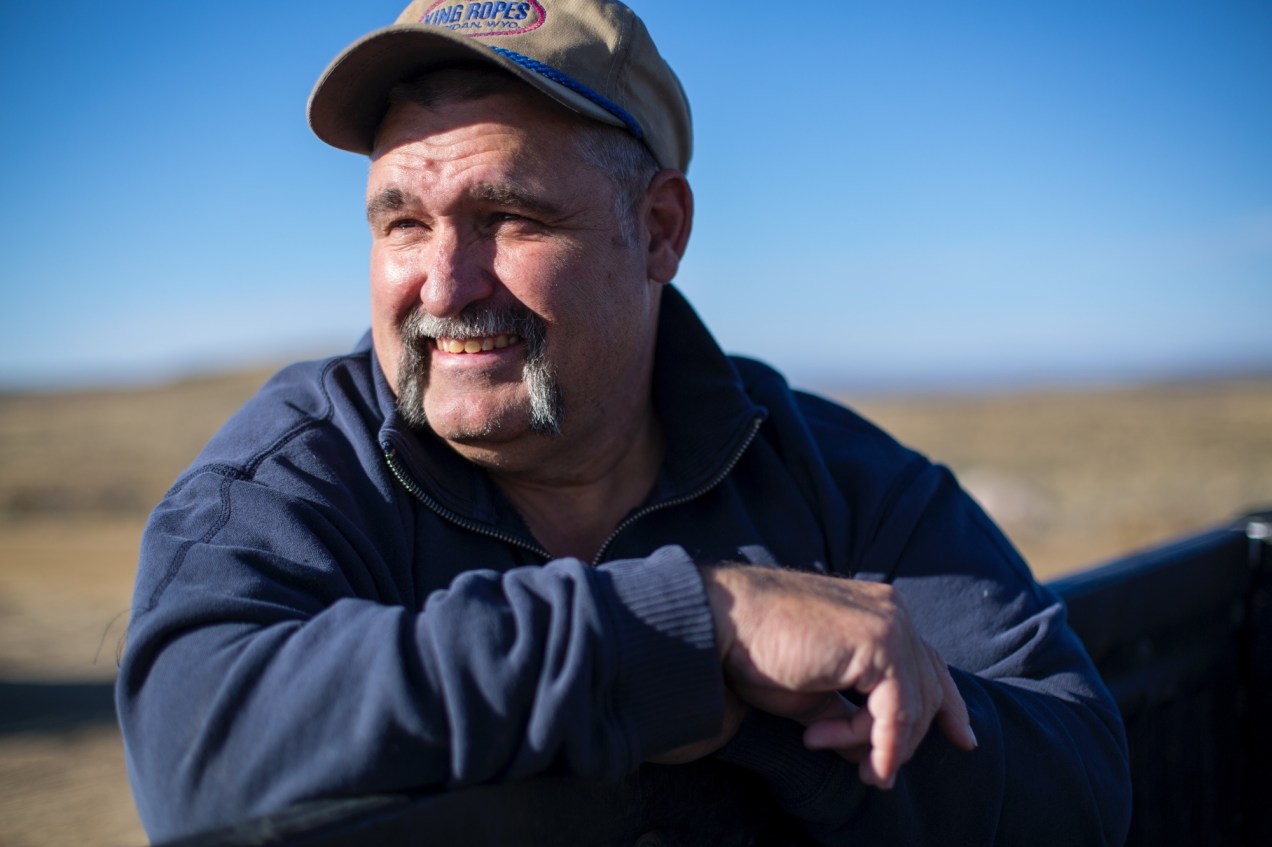
The stranger at the bar next to me was a stout, handsomely gruff, whisky drinking looking fellow. Handlebar mustache and all. You could’ve placed him anywhere in the world, and still immediately recognized him as a man of the Western Rocky Mountains, USA. He wore a King Ropes hat, and his pointed gaze could make you tell the truth.

“I’m Andrew,” I said in a young, overly optimistic way. He looked at me for a moment, as if to test if I were for real.

“I’m Mike,” he said in a raspy, gravely voice. “Mike Ramsey,” as he shook my hand.

I chuckled and immediately told him what my new boss had just said.

“If you want me not to do something, best not to tell me not to do it,” I laughed.

His experience with Texans up to that point was from the loud, rich Houston oil men who’d come up to hunt elk, and the few Boy Scout types that would get lost backpacking the Winds, only to be found weeks later as remains from a grizzly feast. He didn’t necessarily have a high view of my kind. In his mind, we come up with gusto, only to leave broken by the harsh wilderness. And that’s not far from the truth.

It was a slow conversion, but we became close friends.

What I’d come to find as I slowly got to know him over the years, is that he is a very good man, who has lived a wildly interesting life. So interesting and worthwhile that many of his stories demand retelling.

ARS_WY_20160131_3255-PanoF

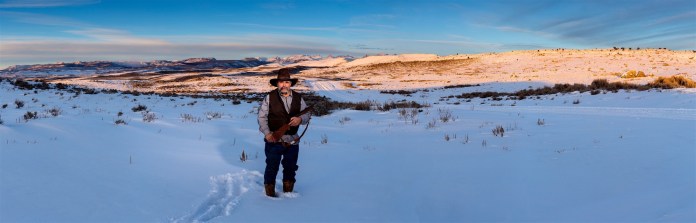
Mike, Elk Guide, Wind River Range, County 23, WY, 2016

Over the years, Mike has been (or still is) an elk guide, snow plowman, BLM (Bureau of Land Management) petroleum engineer technician, fishing guide, cowboy, forest fire fighter, painter, avalanche safety, snow machine guide, and much more, I’m sure. He has a deep and unique relationship with the rugged land he chooses to call home.

So as much as I tried to avoid it because he is my friend, Mike had to be the first Wyomingite for my book. And don’t worry, I will explain why Rob so adamantly didn’t want me to talk to Mike, and a few harrowing and hilarious stories from his incredible life.

The Wyomingites, will explore the personalities and stories of the men and women who make Wyoming their home. From each of the 23 counties, come unique and challenging landscapes both shaping and being shaped by the (few) humans who inhabit its borders. The photographs are a unique mixture of landscape panoramic, and environmental portrait.

If you would like to learn more, invest to help make this book happen, or you think you have a wonderful Wyomingite subject for me, please email me directly.

— andrew


In honor of the NPS Centennial this year, I have put together a special collection of (some never before seen) my favorite National Park prints. Please check it out and know that 5% of all the profits from the sale of this artwork will be donated to a wonderful organization that works hard to help preserve our Nation’s most magical places, The National Park Foundation.. We will be visiting almost all of the 59 National Parks this year, so check back often as we will be updating the page regularly. Thank you so much for your support!


Want to learn photography and enjoy a guided experience? Check out my exciting, NEW workshop dates:
 
Big Bend NP // Night/ Landscape // 2016 – ONLY 2 SPOTS LEFT!
Isle of Skye // S C O T L A N D // 2016 – 4 SPOTS AVAILABLE
Highlands // S C O T L A N D // 2016 – 4 SPOTS AVAILABLE
 
If you are interested in licensing any of the images/ video from this post, please visit my stock agency:
 
Tandem Stills + Motion // Andrew R. Slaton
Image Brief // Andrew R. Slaton
 
If you are interested in purchasing prints from this post, please check my prints for sale, or email me directly for a custom request:
 
Andrew R. Slaton | photographer // prints
 
For assignment work requests, please email me: andrew@andrewslatonphoto.com
 
Thanks for visiting AndrewSlatonBlog.com!
 
all images and content © ARS Media, LLC 2016
 
Standard