random thought, travel, workshop

The First 10,000 Miles (part 3)

What I Learned From Life On The Road (Part 3)

Well I was born a rambler friends, and I intend to die that way.” — Townes Van Zandt

Sorry it’s been so long, folks. Season 2 of #nomadlife got a bit more complicated and difficult… as a consequence, I took a bit of a hiatus from writing. But I always intended to have a Part 3 to the First 10,000 Miles… so here it goes.

Stay tuned for The Next 10,000 Miles.

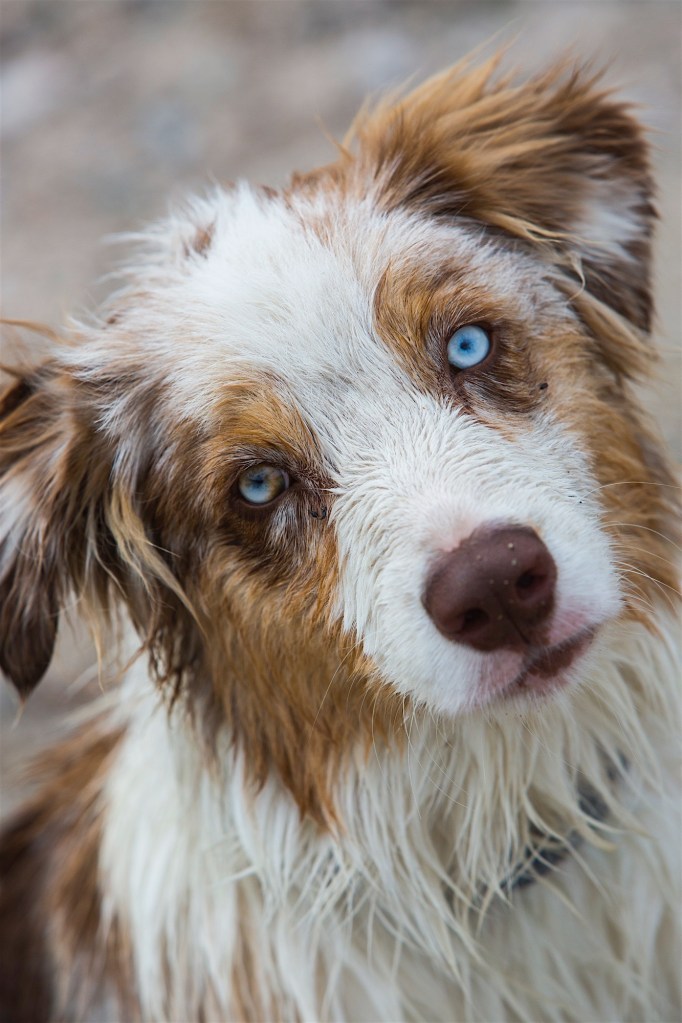
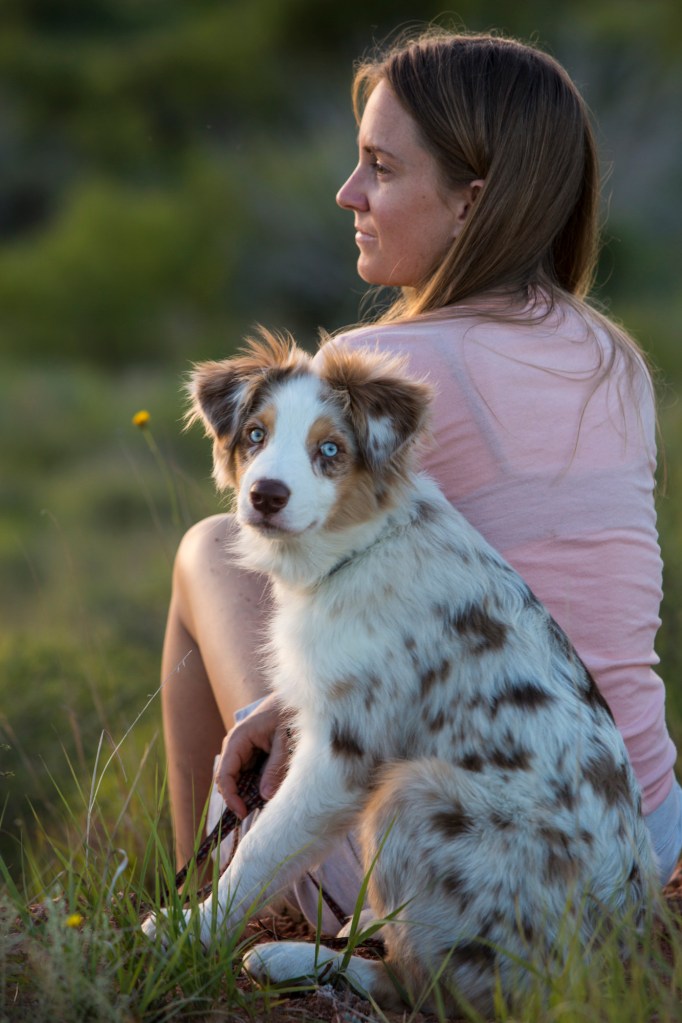
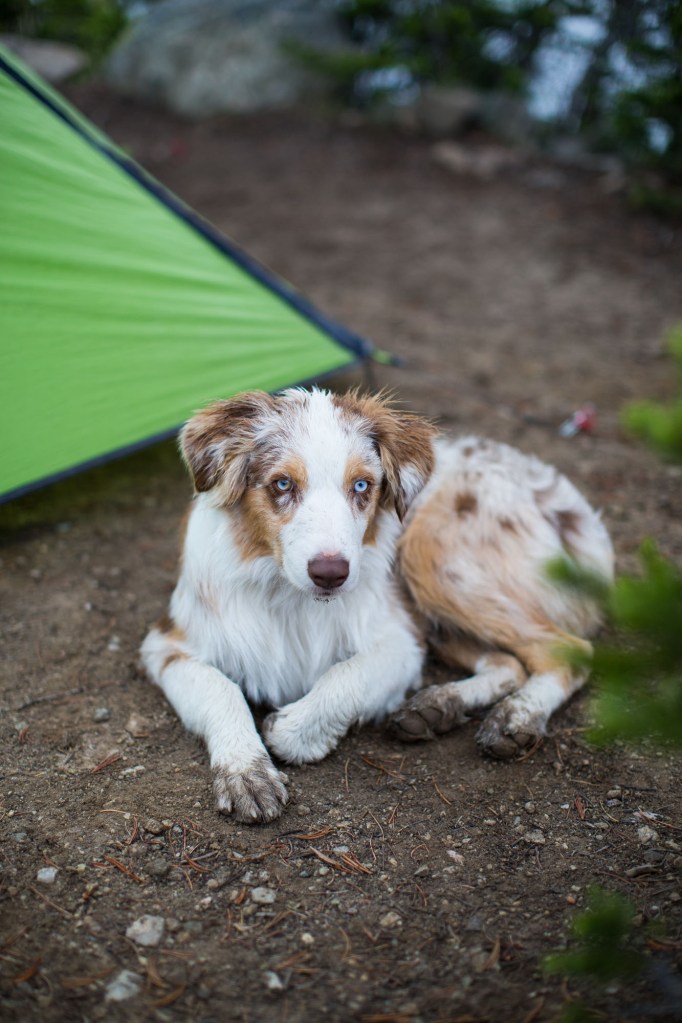
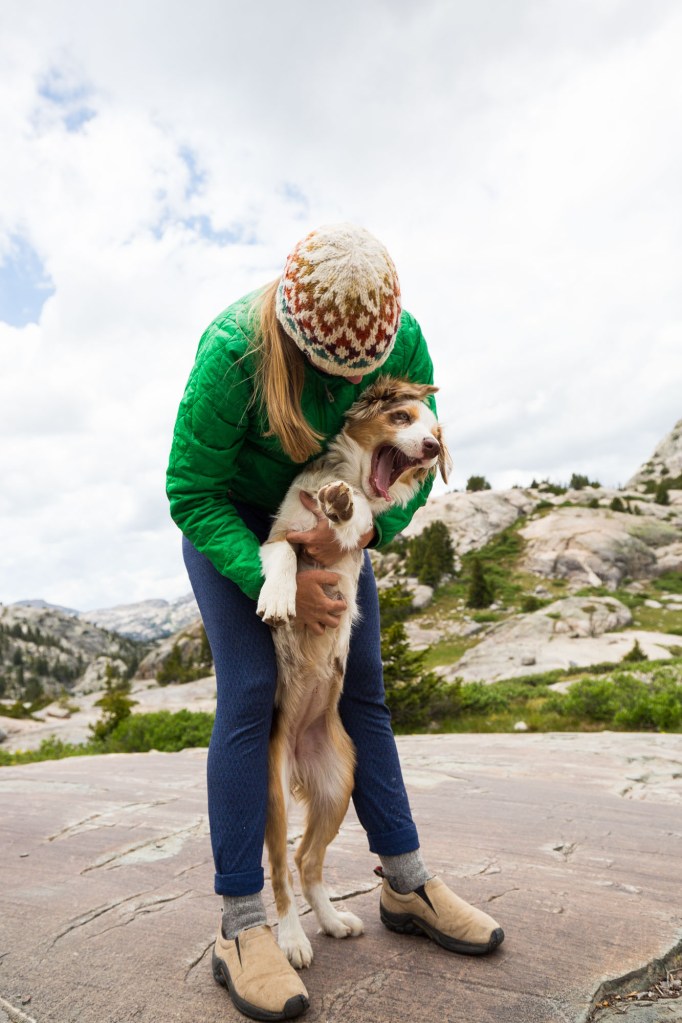
A 6 month old blue eyed red merle australian shepherd puppy

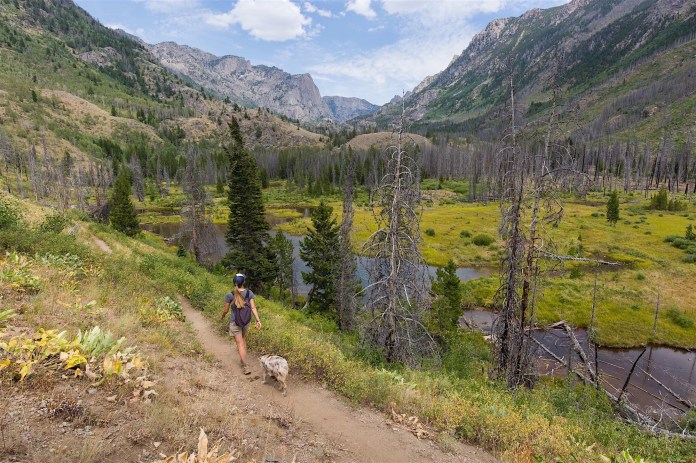
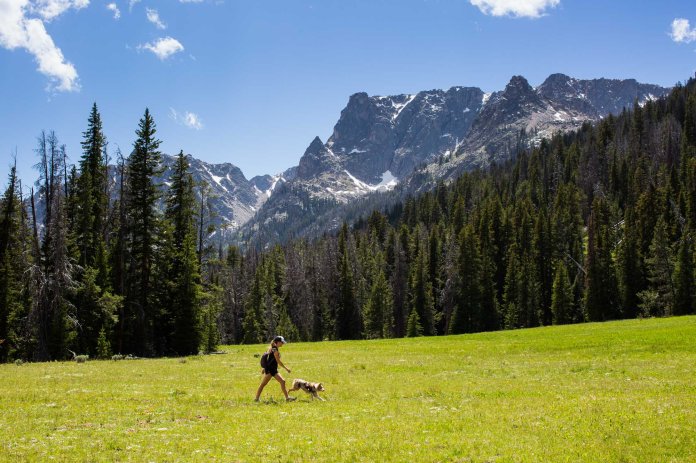
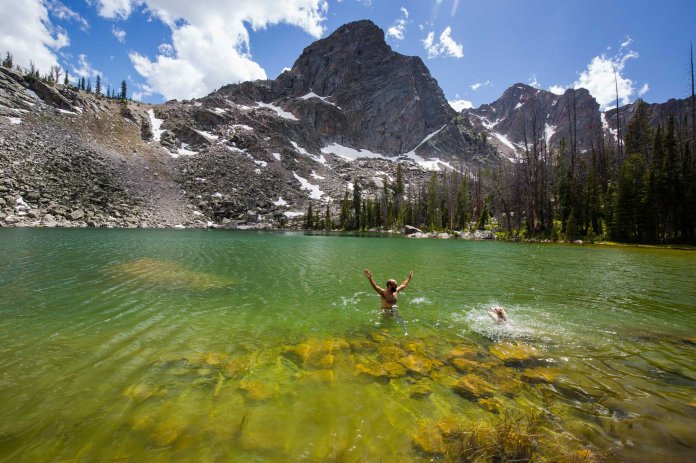
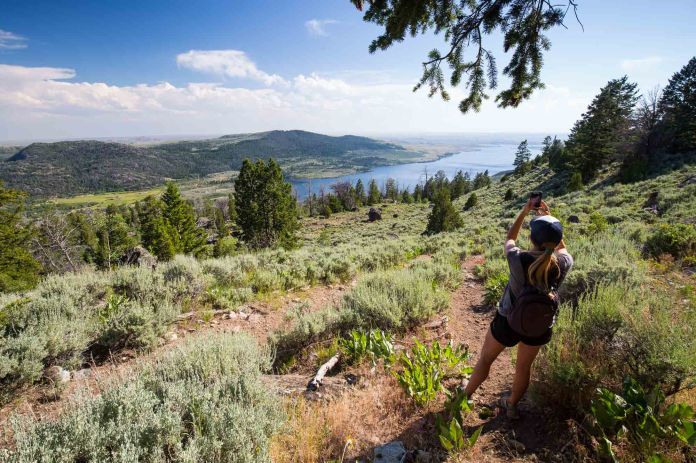
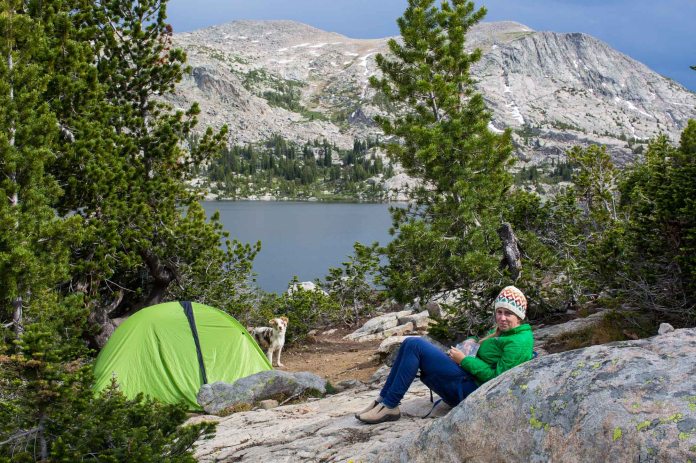
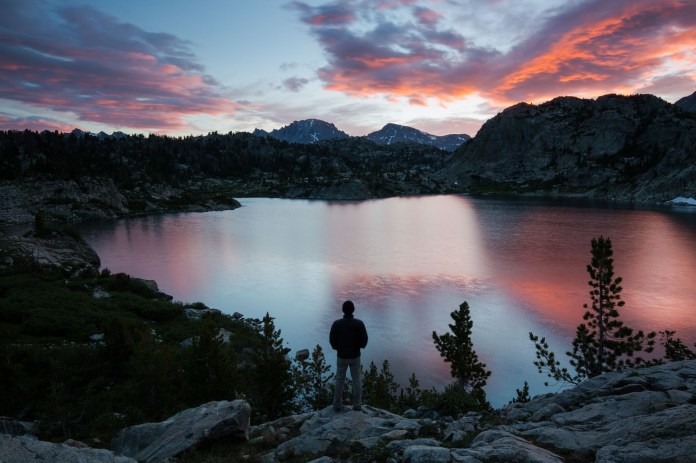
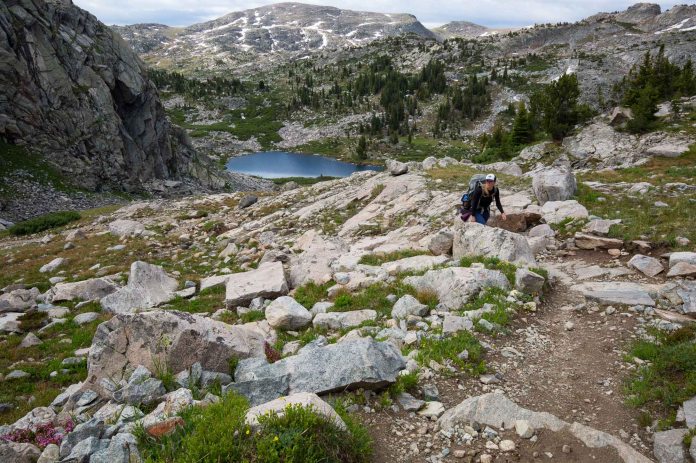
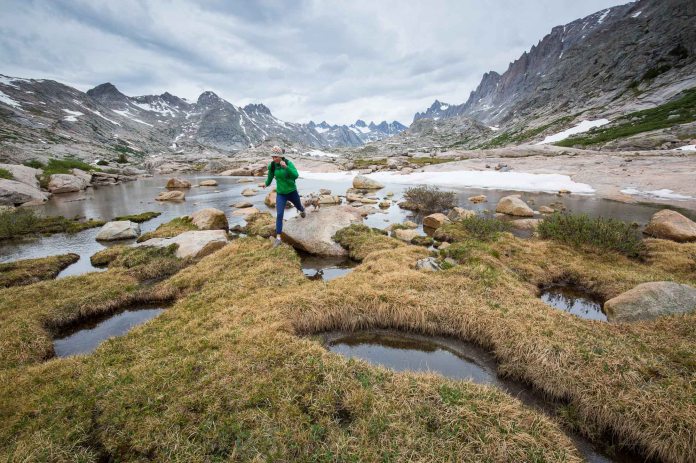
Islay Blue was growing fast… and needed a ton of exercise. So we got in the routine of hiking almost every day, at least 5-8 miles. We ended the summer in the best shape of our lives. Breathing fresh mountain air, swimming in the clearest, cleanest water, eating healthy at home, reveling in breathtaking scenery every day, and hiking a ton.

30. The Road to Good Health Starts With Prevention… A healthy lifestyle for the mind, body, and soul goes so far.

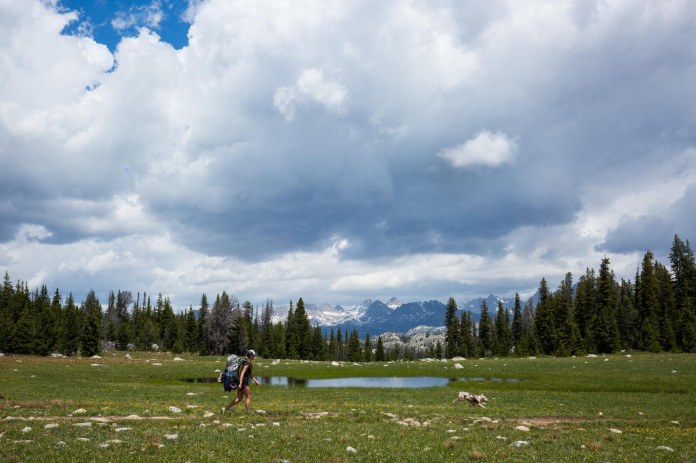
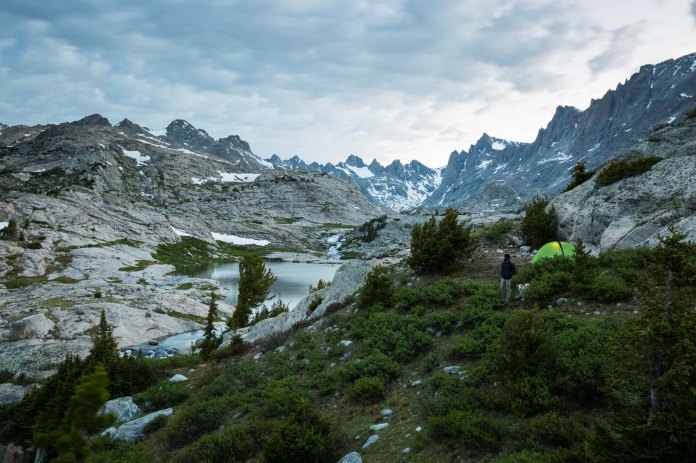
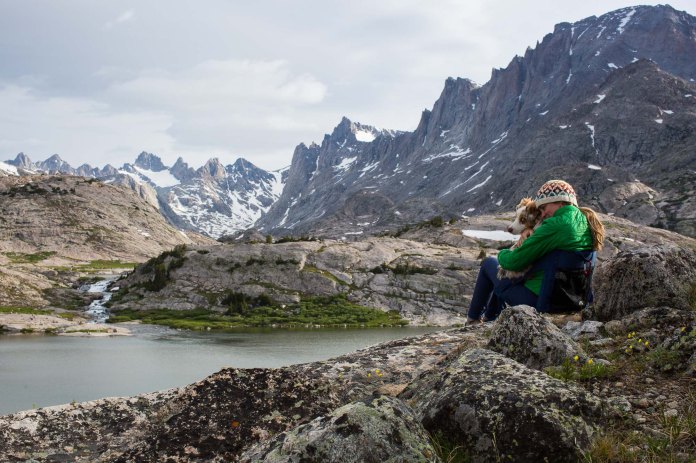
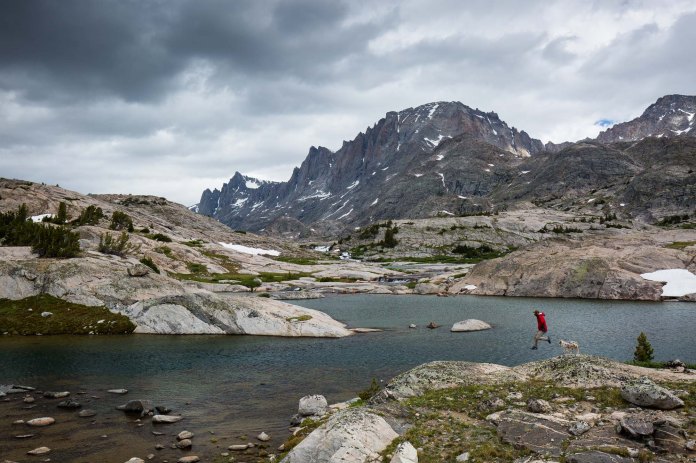
A woman and her dog hiking the New Fork trail in the Winds Continue reading

Standard
random thought, travel

Our National Parks Odyssey

Originally appeared on April 10, 2017 on the Red River Paper Blog

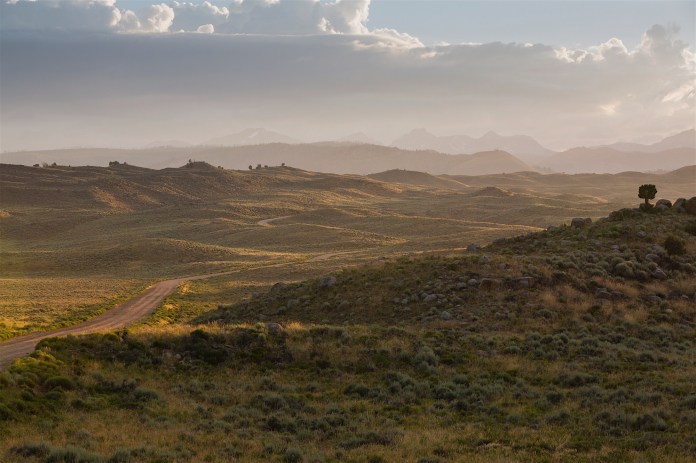
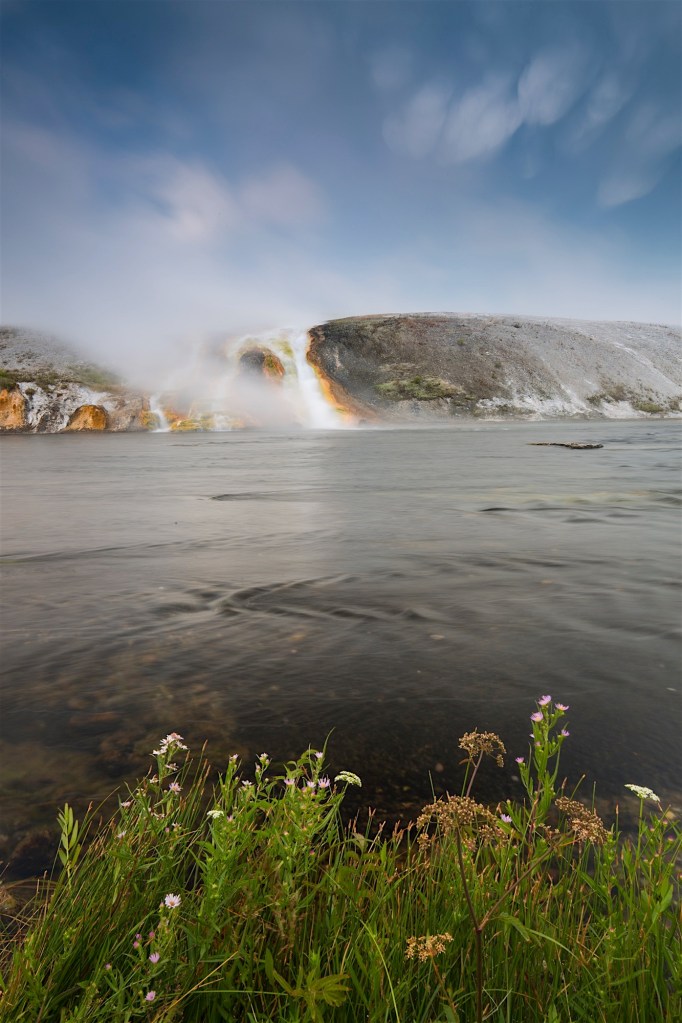
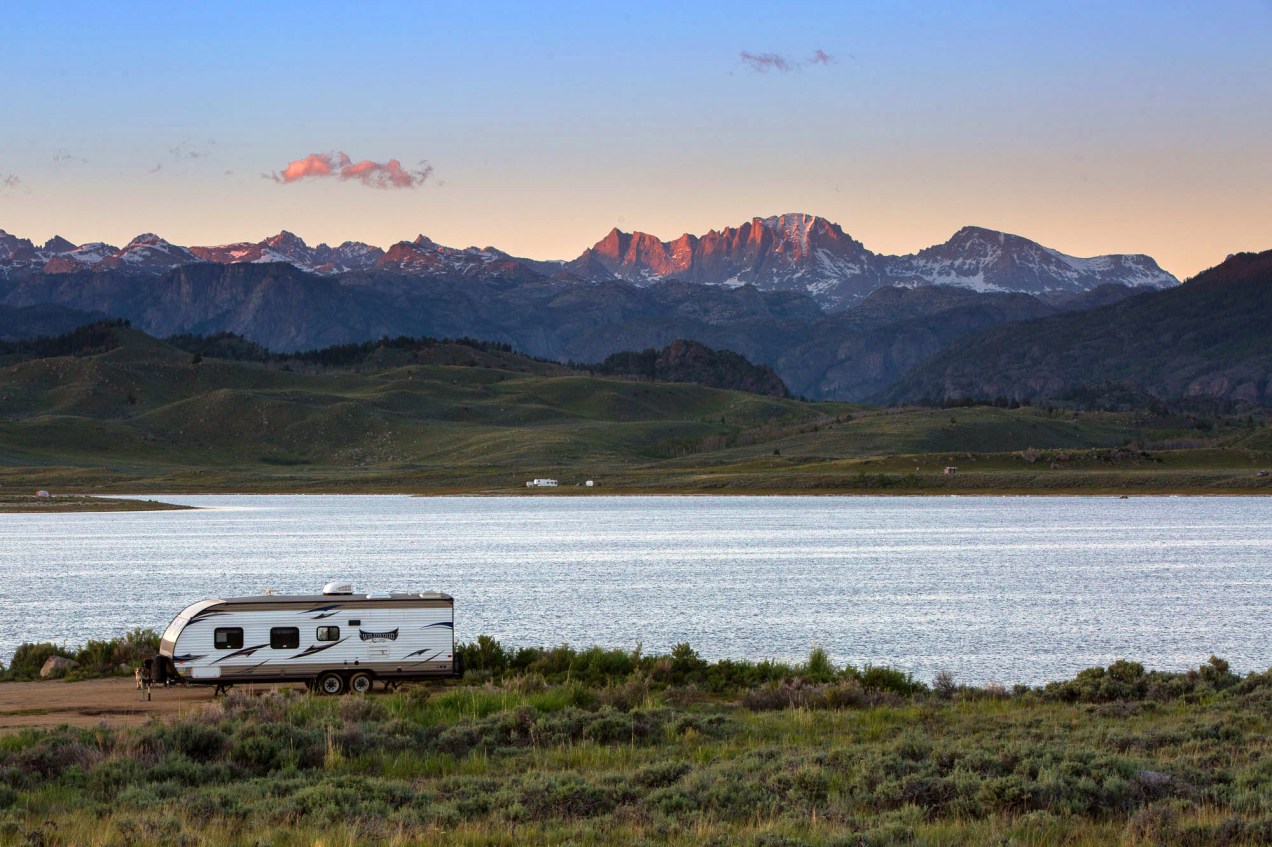
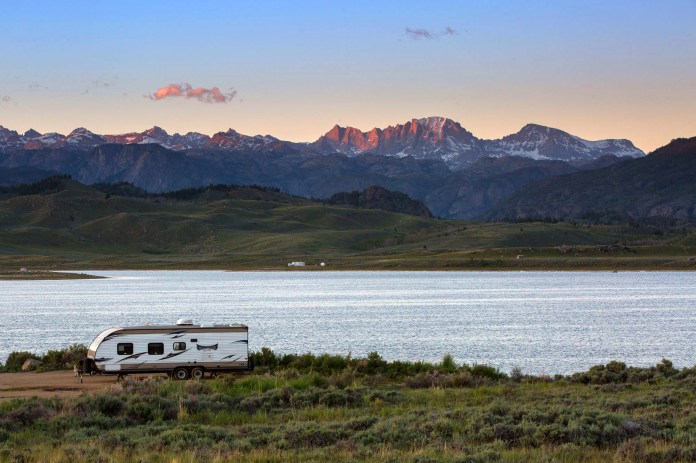
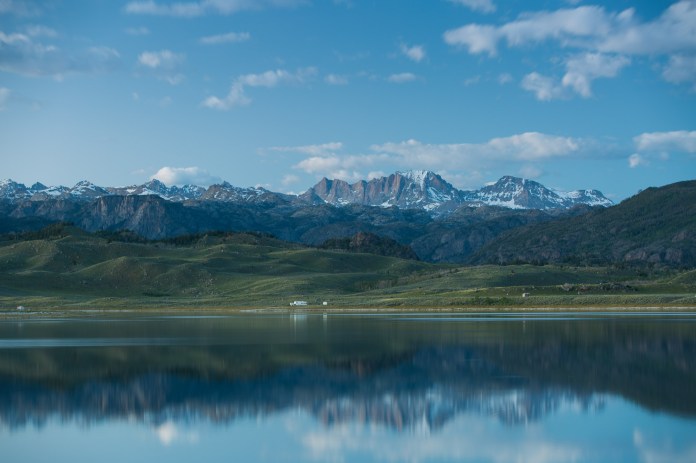
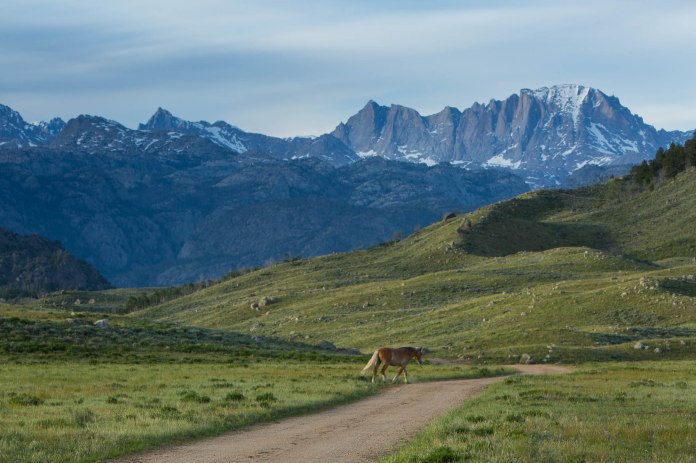
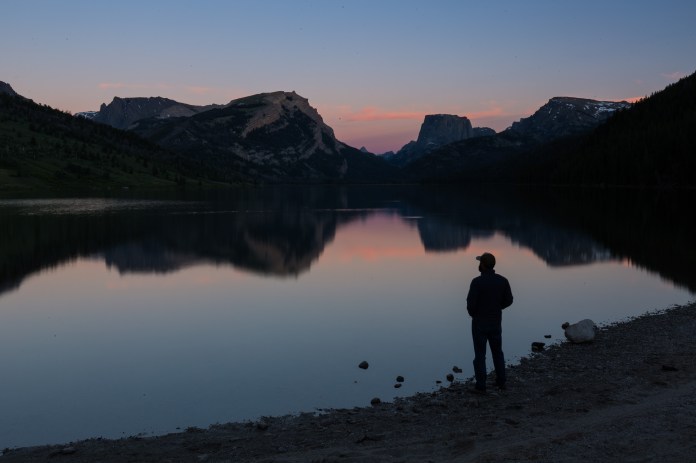
Steam from the early morning chill rises off the Green River in the Wind River Range of Wyoming.  Squaretop, an aptly named handsome granite mountain in the distance catches the first rays of the sun, rising somewhere I cannot yet see.

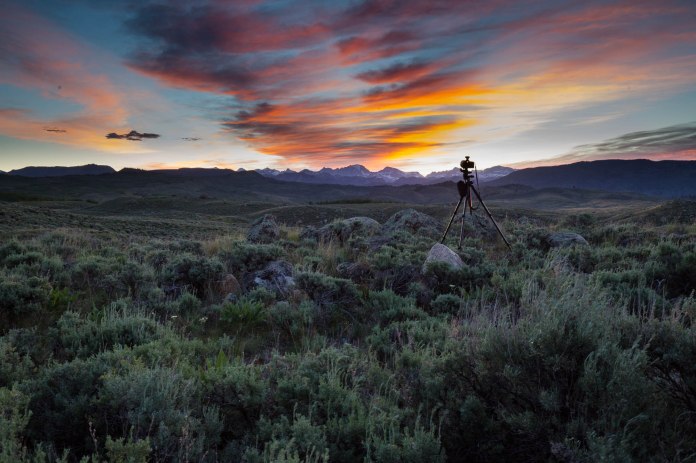
I sip my scalding, black coffee in our trailer and wait. This is what I do. I get paid to just sit out in some of the wildest places of the world until that unreal moment of light, weather, and circumstance all line up to paint a breathtaking canvas before my eyes. All I have to do is record it on a digital sensor. Well, okay, there is a bit more that goes into it.

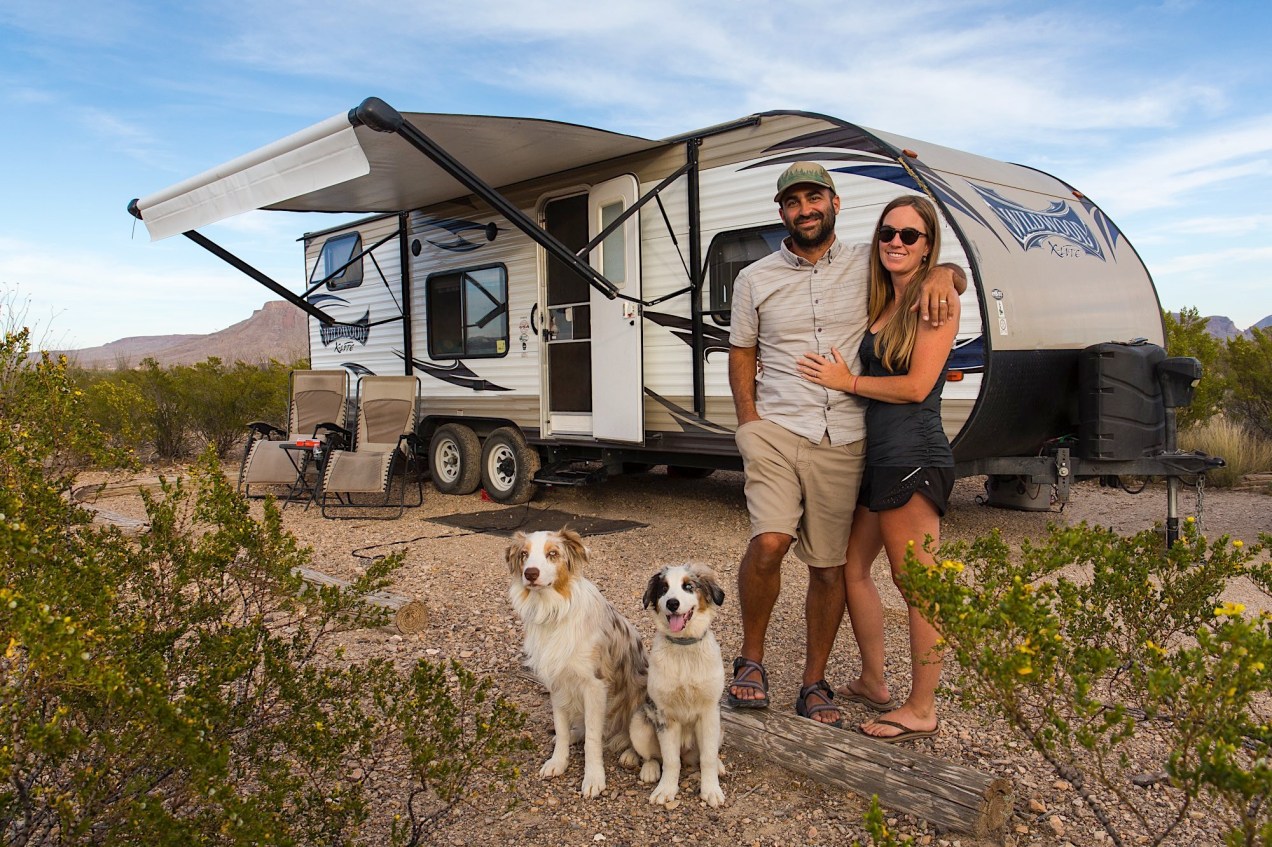
Andrew, Ellen and their two dogs. The cat declined to pose. © Andrew Slaton

People have asked a lot lately how my wife and I ended up with almost no possessions, living on the road out of a travel trailer, with two Aussie pups and a cat. You can almost see their thoughts reeling: “What is it with these Millennials? Do they have a trust fund? Are they constantly fighting in those tight living quarters?” The truth is we knew there was a simpler life out there– and we craved to know it.

My wife Ellen and I, both in our 30s, are at the very front end of a… well, let’s just say interesting generation. We were brought up by boomers in suburban Dallas, Texas. I grew up a nature nerd, spending hours watching National Geographic documentaries and dreaming of far off places while Ellen was climbing trees and playing in the creeks surrounding her neighborhood. Early on, we both developed a strong appreciation for the outdoors.

© Andrew Slaton

I went on to get a degree in photojournalism from the University of Texas at Austin, and started a decade-plus career as a commercial photographer. Ellen got her degree in Art History, became a certified yoga teacher and worked as a creative consultant to non-profit organizations. Neither of us came from money so we both learned to be scrappy and work really hard.

Living in Dallas was going fine; just the usual ups and downs of the freelance life. We had settled into a little duplex near the lake and were traveling about half the month for location shoots when we began to realize that after being back for only a few days, we were ready to head out again for the next adventure. The noise and pace of the city was beginning to wear us down.

© Andrew Slaton

So one night Ellen had the idea to sell all our stuff, buy a travel trailer, and hit the road full time. Almost none of my work required us to live in Dallas, or any one place for that matter. It would be a total dream come true for us both. We decided to just do it with the objective of spending about five years visiting and photographing in all 59 national parks– a pretty ambitious undertaking. Time, we had, but money was another matter.

© Andrew Slaton

Life as a roving freelancer is completely feast or famine. That’s why, as a landscape and active lifestyle photographer, I’ve learned to have a multi-pillared approach to my business. There’s my commercial work, editorial work, teaching at workshops, shooting stock and to round it all out marketing fine art prints. The theory is that if any one (or even two) of these revenue streams slows down or dries up, the other two or three can continue to prop us up.

Once we finally became full-timers, we felt completely at home. On our inaugural morning in the trailer, I remember waking up, stumbling the four feet over to the dinette for coffee, looking out the window and seeing a bison grazing ten feet away from me. It was glorious. So here we are: almost a year down the road and neither of us have any regrets. Well, I take that back; we only wish we would’ve done this sooner.

Space is tight but very workable. © Andrew Slaton

Our travel quest spawned a fine art print concept that has helped keep us on the road so far. I’ve always loved creating prints. Especially in the darkroom days. For me, it’s a very tangible way of presenting my work to folks who appreciate photography. And it refines my work. Presenting an image on Instagram is one thing but printing it out large is another. For readers who have printed their own photographs, you know what I mean.

I typically sell limited edition 12 x18-inch or smaller prints through my web site, output on my faithful Epson 2200. I print on Red River Polar Matte Magna (see Resources) because it is a smooth matte with the heaviest weight on the market. Prints have depth and contrast and they also have a substantial feel to them. They remind me of the old fibre papers of the analog days. I also like Arctic Polar Luster (see Resources) for its heavy weight and incredible color and contrast.

© Andrew Slaton

I’ve sold more than 250 prints so far, shipping them weekly from wherever we are at the time. Printing on the road gives me another great way to promote and disseminate my work and to generate some extra income. Keeping connected, though, can sometimes be challenging.

Often, when on the grid at campgrounds, RV parks or cafes we have Wi-Fi, albeit very slow. When we are off the grid, I will create a hotspot from my phone that is often faster than the Wi-Fi we get from campgrounds. And then there are the times that we are so far off the grid, there is no internet or cell service. At times like these we simply enjoy the silence and rest.

It’s not all work– there’s time for relaxing, too. © Andrew Slaton

Before we hit the road, our lives were a bit more, well, all over the place. Ellen was running around the affluent Dallas neighborhoods conducting private yoga sessions for stay-at-home moms and retirees. I was working on corporate and commercial shoots, doing post-production, involved in website upkeep duties and more. Half the month was spent in my dark office staring at a computer, mostly, and staying up late watching television. During the other half, we were traveling, living outdoors, sleeping in a tent, cooking over an open fire, waking up with the sunrise and going to bed when it went down.

Now I awake nearly every morning an hour or so before the dawn and let my two girls, Islay and Skye outside to play together. My coffee bubbles on a little three-burner gas stove while Colonel Bubba, our cat, and I sit and enjoy the silence of the pre-dawn. I have previously scouted a location for the morning’s shoot so once I pour the rich, dark elixir into my large travel mug, I kiss Ellen and the girls goodbye, hop into the truck and head out with two Canon 5D Mark III bodies and an arsenal of lenses.

© Andrew Slaton

Dawn shoots are typically too early for anyone to want to get up for so that means I have the natural beauty of a new day all to myself. I rarely spend this time on my lifestyle, commercial or editorial clients. Morning is “me time.” The rest of the day consists of long hikes, social media computer time, truck and trailer maintenance duties, and afternoon/evening outdoor lifestyle shoots.

There’s a lot to learn being full time RVers. And the only way to learn it is as you go. I had a workshop to lead in Yellowstone last summer, so Ellen and I decided to find a nice, secluded spot in the National Forest near West Yellowstone to park our trailer. We set out down a dirt road with our 4×4 truck and 29-foot Forest River travel trailer.

We learned an important lesson only a quarter mile down that road: our trailer is not made to do rough, dirt roads. As we worked our way slowly down the dusty, two-track trail, we hit a small bump. Small enough that our four-wheel-drive Ford F-150 didn’t even register it. But it was a seismic disaster for our trailer and it took some time to set it right.

© Andrew Slaton

Life on the road has also taught me to be a MacGyver, of sorts. We don’t have the money to just take our truck and/or trailer into the shop every time there’s a problem. YouTube and my meager toolbox have become exponentially more valuable to me than I ever imagined they would. I guess the point is, that we are living the dream, but at a cost. And to us, the cost is so minuscule, we feel as though we’ve rigged the game on this one.

So how do we do it? Well, it’s pretty simple when I get to the heart of it. We changed our priorities. Dramatically. Now, instead of a mortgage for a nice home, we have a gasoline budget. Instead of working toward retirement, we do what we love so we will never want to retire.

My dad never overwhelmed me with a ton of advice. But one thing he told me–and that I have never forgotten–sums up the way I have lived my life: “Do what you love, and the money will come.” Right now all we want out of life is to live simply and be fulfilled. And so far, we feel like the richest people on earth.

About Andrew Slaton

Andrew Slaton is an award-winning photographer who has done assignments for more than 50 clients and specializes in lifestyle and outdoor images. He is a Red River Pro who outputs his National Parks prints in limited editions of ten each, printed on archival Red River papers with  fade-resistant pigment inks.

Resources

Red River Polar Matte Magna Card Stock

Arctic Polar Luster

What’s To Come

Andrew and Ellen will be sharing their adventures with us from time to time. You can help them achieve their goal by adding one or more of his prints to your collection. You can also subscribe to a collector’s edition of prints from each of the 59 National Parks he photographs.

Contact Information

Visit Andrew’s web site and view his work here.

Learn about and sign up for one of his future workshops here.

— Andrew


Ellen and I have hit the road full-time! We are on a mission to inspire and educate everyone on the importance of getting outside. Check out my workshops and my prints, made #ontheroad in my mobile print studio. The revenue will help propel us further and further on this great adventure. Enrich yourself and others… and feel great about it too as you’re helping to ensure our wild lands are cherished and to keep the wild spirit of the American Dream alive. Our goal is to visit all 59 National Parks in 3-5 years. LEARN MORE ABOUT WHAT WE’RE DOING HERE


Want to learn photography and enjoy a guided experience? Check out my exciting, NEW workshop dates:
 
SCOTLAND // ULTIMATE ROAD TRIP // 2017 – SOLD OUT
TELLURIDE // LANDSCAPE + MOUNTAIN LIGHT // 2017 – 4 SPOTS LEFT
GRAND TETON // LANDSCAPE + FALL COLORS // 2017 – 6 SPOTS LEFT
YELLOWSTONE // LANDSCAPE + WILDLIFE // 2017 – 6 SPOTS LEFT
 
I’m excited to announce my “The Photographic Guide to Our National Parks” series of eBooks:
 
See what’s NEW + download your free Grand Teton National Park sample today!
 
If you are interested in purchasing a “print from the road”, please check my prints for sale, or email me directly for a custom request:
 
Andrew R. Slaton | photographer // prints
 
If you are interested in licensing any of the images/ video from this post, please visit my stock agency:
 
Tandem Stills + Motion // Andrew R. Slaton
Image Brief // Andrew R. Slaton
  
For assignment work requests, please email me: andrew@andrewslatonphoto.com
 
Thanks for visiting AndrewSlatonBlog.com
 
All images and content © ARS Media, LLC 2017


Standard
random thought, travel

The First 10,000 Miles (Part 2)

What I Learned From Life On The Road

You cannot count the miles until you feel them.” — Snowin’ on Raton, Townes Van Zandt

It’s funny: I don’t feel like we’ve been on the road full-time.

It still feels like a trip.

Just a really, really long, strange trip.

We’ve settled in to life in less than 200 square feet. Seriously. That hasn’t been the hard part at all. The hard part for me has been settling in to the dream and routine of shooting almost every day. And not getting to married to my plans.

People told me I would have to be flexible with plans, and I brushed them off. “They don’t know how good I am at planning,” I thought.

Well, they were right. I was wrong.
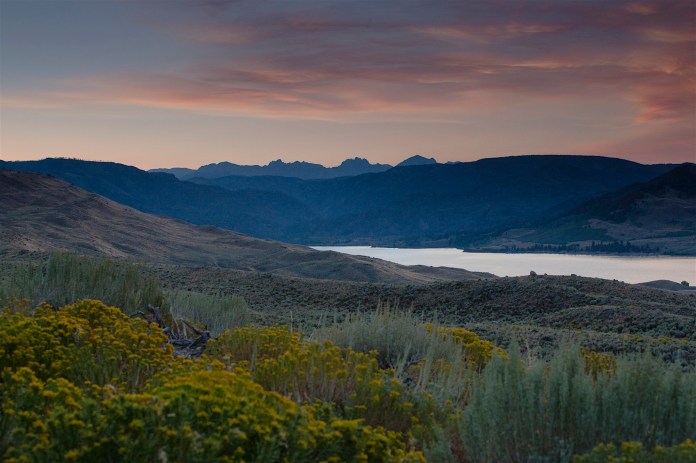
Sunrise over the Winds at Boulder Lake

After our backpacking trip into the Titcomb Basin, we spent a few more days in and around Boulder, WY. We continued to explore the southern Winds, and stay plugged in at our free RV park.

Generally for every day off the grid, I need a day on, with power and internet, etc. I am out shooting and writing and creating when we’re off the grid, so you can imagine, when we plug back in, there’s a ton to do. And I don’t have anyone sending me a regular paycheck at this point. So I’m constantly hustling. I constantly have to find new ways to fund our life on the road.

14. Life on the road is way more challenging, but WAY more rewarding.

And anyway,

15. Comfort is overrated.
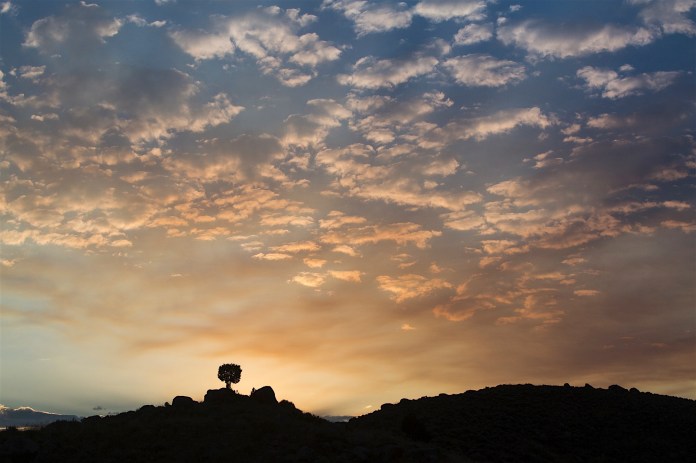
Sunrise over the foothills of the Winds near Boulder Lake

Sunrise over the foothills of the Winds near Boulder Lake

I’m working more than I ever imagined I could. But I’m also outside, hiking, playing games with Ellie, playing fetch with Islay. My quality of life is so much better than when we were in the city.

16. There are just as many hours in the day as you need.

Sunrise over the Winds near Boulder Lake

So speaking of country life vs city life… we had the distinct privilege of joining our friends for Sublet County’s crowning jewel of summer events: The Green River Rendezvous.

See, in the fur trapping days, mountain men would literally descend on the Green River Valley in the summer to trade with their fellow trappers, indians, fur companies, etc. It was a rowdy time, as these men were prone to heavy drinking, fighting, womanizing, and other nefarious activities.

But they were important times in the history of the Rockies. This time shaped these places. And Pinedale is still wild. There are still real cowboys here. One of the longest remaining and oldest running cattle drives in the world happens right here in the Upper Green every summer.

It’s a land of cowboys, rough necks, mountain men/ women, ranchers, hunters, survivalists. The Winds are not for the weak.

The Rendezvous Rodeo in Pinedale, Wyoming celebrates the cowboy lifestyle of the area and the fur trappers/ mountain men of the past in the Wind River Range of the Rockies

So it was a real treat to experience Rendezvous again after 10 years.

A celebration of all things Wyoming. All things tough.

And we topped it off with the Rendezvous Rodeo.

The Rendezvous Rodeo in Pinedale, Wyoming celebrates the cowboy lifestyle of the area and the fur trappers/ mountain men of the past in the Wind River Range of the Rockies

The rodeo reminded me of when I lived here and worked for the local newspaper a decade ago.

It was my very first Rendezvous. I was bright eyed and bushy tailed. And a friend of mine (a Pinedale local), over drinks at the local brew pub one night, proceeded to lay out an argument on why I should sign up for the rodeo. He was pretty convincing.

“Well, yer from Texas, aren’t ya?” he said matter of factly. “Bull riders come from Utah and Texas. You should sign up to ride a bull. You’ll be fine… yer from Texas!”

I couldn’t argue with his logic. I was from Texas after all.

Thankfully, I sobered up before he could get me to the sign up sheet.

Several of the men that year broke bones, bruised muscles, and took pretty big hits to their pride.

I watched from the bleachers with my camera.

17. Just because I’m from Texas doesn’t automatically mean I can ride a bull… or even a horse, for that matter.
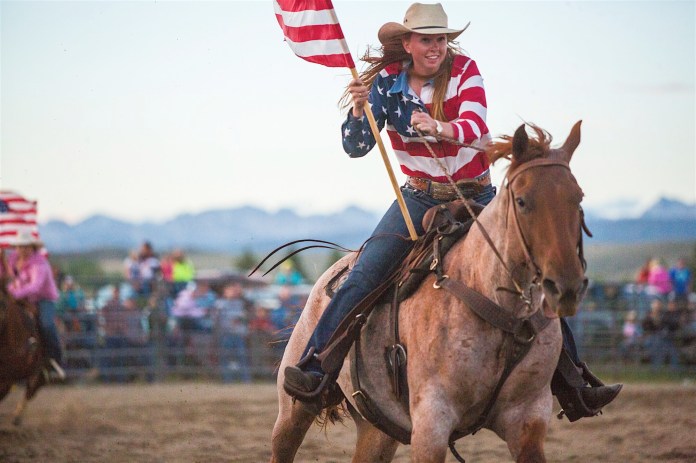
The Rendezvous Rodeo in Pinedale, Wyoming celebrates the cowboy lifestyle of the area and the fur trappers/ mountain men of the past in the Wind River Range of the Rockies

Rendezvous ended and the town of 2000 or so, which had swelled to nearly 10000, retracted again to its normal capacity.

It was time for us to get moving. We get restless being anywhere too long. So we hitched up and moved 2 hours north to Grand Teton National Park. Our 5th of 59 parks to visit.

Teton is possibly my favorite National Park of all time, with an asterisk. There’s a possible tie with Big Bend. It really depends on which park I happen to be in at the moment that determines which is my favorite.

I’m back in the Tetons, so it’s my favorite at the moment.

18. A good problem is to have two favorite places.
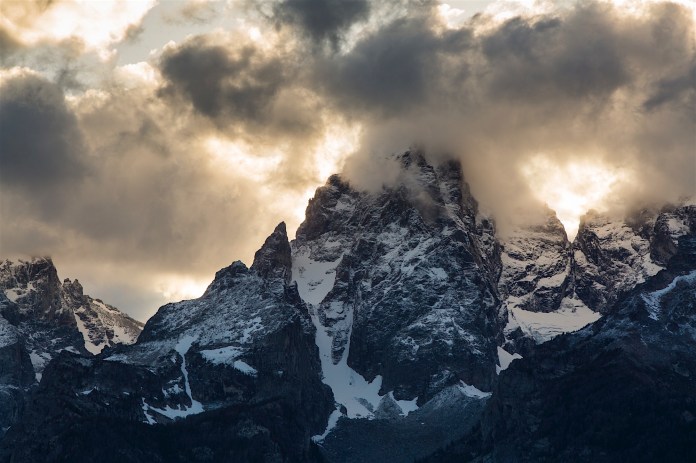
Dramatic clouds loom over Swabachwers Landing in Grand Teton National Park

The Tetons have a magic about them. It’s in the air, and the reflections, and the clouds, and the light.
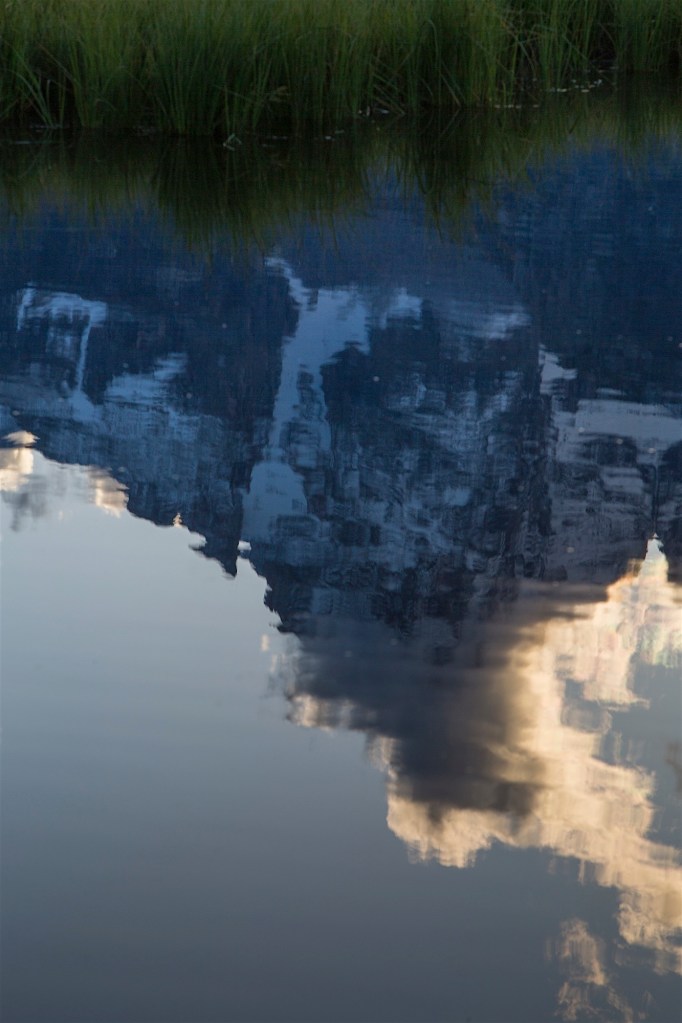
Dramatic clouds loom over Swabachwers Landing in Grand Teton National Park

It’s impossible to explain. You just have to experience it.
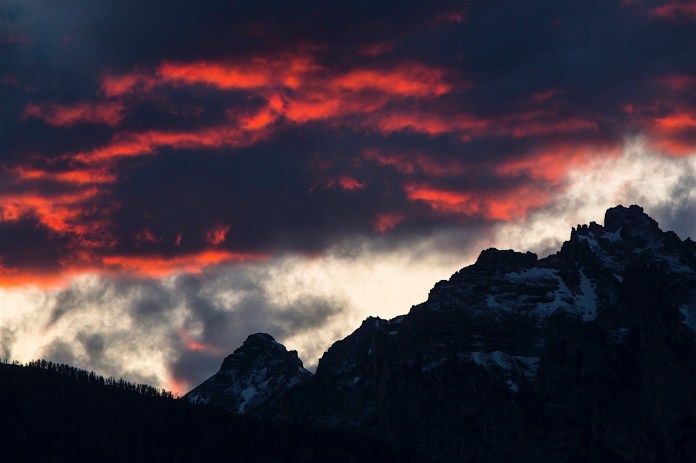
Dramatic clouds loom over Swabachwers Landing in Grand Teton National Park

Sunrise over Mount Moran at Oxbow Bend

It just never ceases to amaze me, this place.

19. If a place keeps calling you back in the depths of your soul, you have to listen and heed.
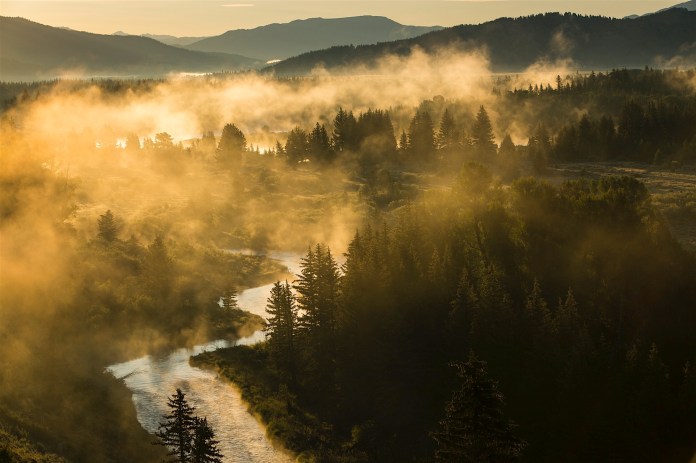
Fog rising from the Snake River in the morning

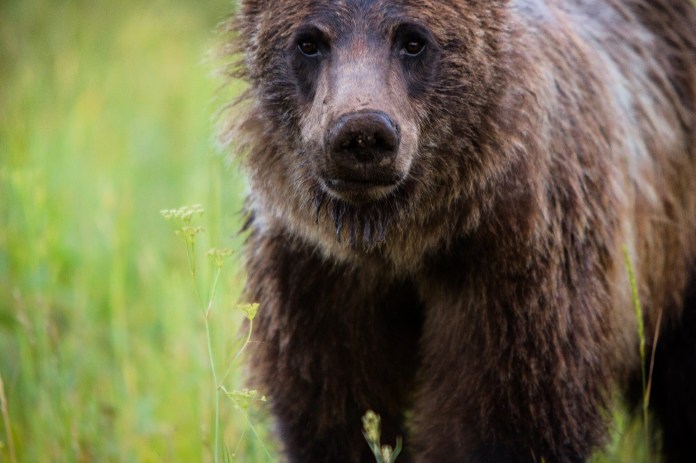
So I’m a tad bit obsessed with grizzly bears, and aside from Alaska, this happens to be one of the best places to see them.

I hope and wish and pray every time I go out that I’ll get a glimpse of one of these impressive creatures. Not too close though, mind you. I’m crazy but I’m not stupid. Or under any delusion that these animals want to be friends with me.

But in all these years of spending time in grizzly country, 12 at least, I’ve only seen 5 or so griz.

So that’s what made this particular morning so special.
IMG_7989

When I can tell it’s not going to be a good “landscape” morning, I opt to drive around a few of my secret spots to see if I can get some wildlife shots.

Well, this morning, I did just that. And I got incredibly lucky.

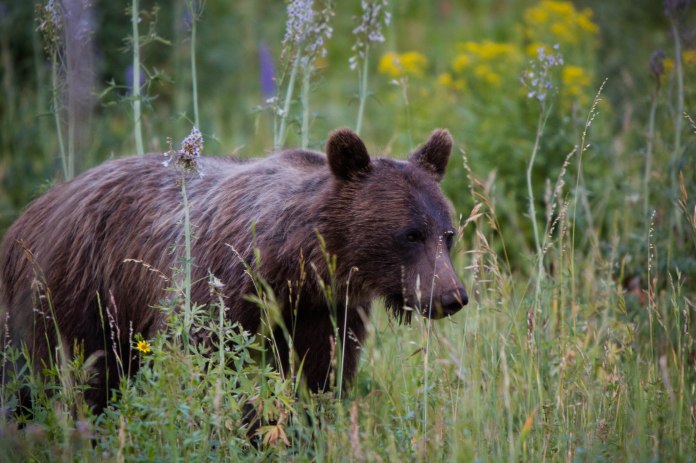
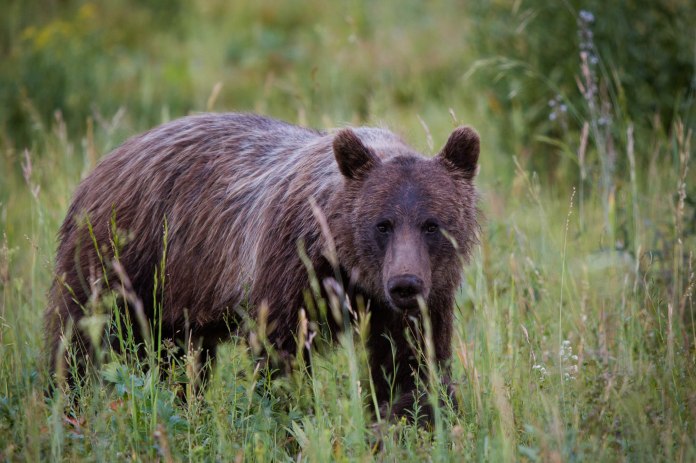
As I was leaving one particular backroad, I came across an open hillside meadow full of midsummer wildflowers. A young grizzly was rummaging around the field, digging up roots and searching for vegetation to eat.

I sat in my truck, safe and sound, about 25 feet away from this magnificent beast. He wasn’t too concerned with me for some reason. So I experienced his presence, uninterrupted for what felt like 30-45 minutes. Who knows how long it really was.

It was truly a once in a lifetime thing.

Just me and the grizzly bear.

20. Fear of creatures is trumped by fascination. 
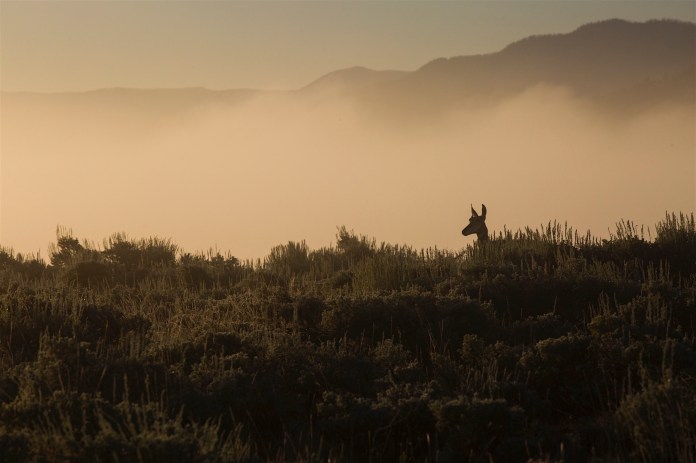
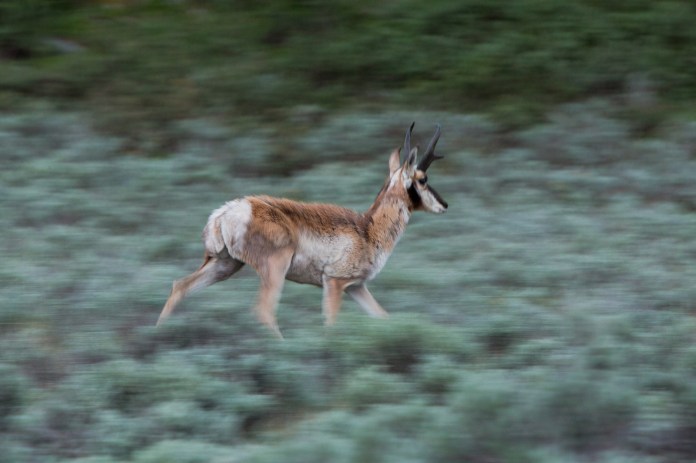
Pronghorn antelope through fog along the river road

When he finally left (it was him, not me to leave first), I decided to try to continue the streak…

Pronghorn antelope and elk through the fog of the Snake River topped off that spectacular morning. I was glowing.
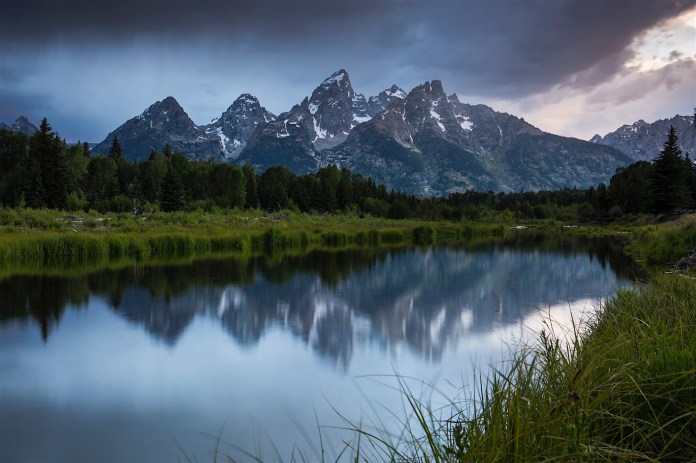
Dramatic clouds loom over Swabachwers Landing in Grand Teton National Park

But it was yet again time to move on. We had a new park to visit… we were finally heading up Glacier.

First though, we would need to pass through the world’s first National Park, Yellowstone.
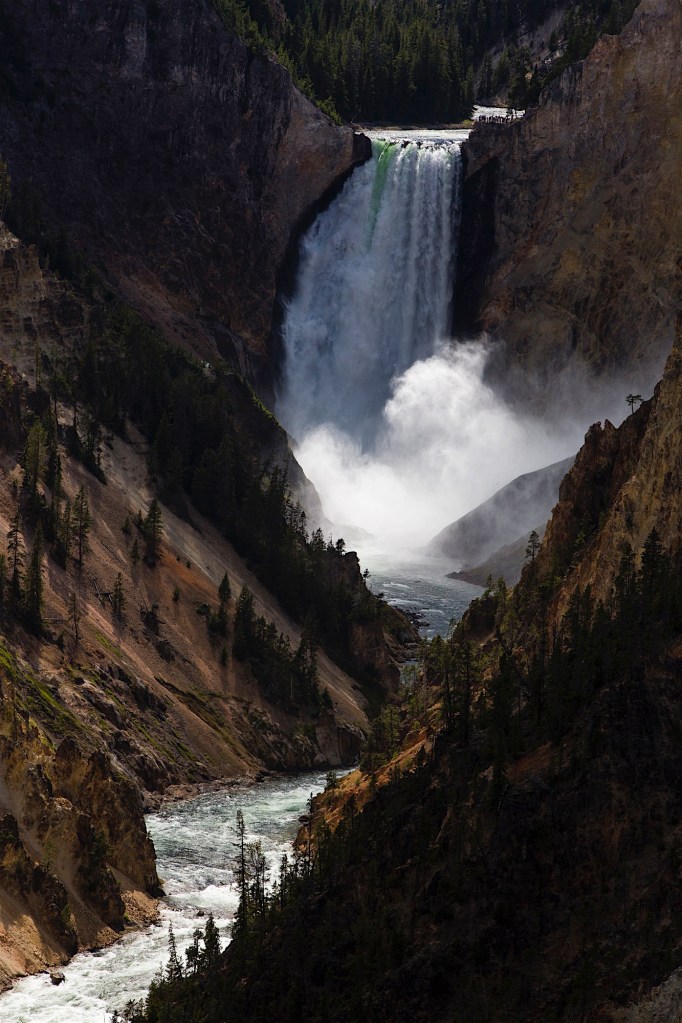
The Grand Canyon of The Yellowstone

I have a bit of a love/ hate relationship with Yellowstone.

Don’t get me wrong, it is an amazing place that I deeply love and cherish. Every time I visit, I have a moment of pure awe. Every time.

But if you’ve been recently in the summer months, you might know why it can also be frustrating.

With every year that passes, Yellowstone gets more and more visitors. And every year, the things that some of the visitors do is more and more strange and dangerous. I’m sure you heard a few of the profoundly dumb things people did this year that made the national news.

I don’t know what it is about this park, but it makes people do some really weird things.

And the traffic jams. Oh the traffic jams.

But I keep reminding myself that…

21. A traffic jam in Yellowstone is way better than one in the city.

Yellowstone Lake at Dawn from Pumice Point

And it is so quiet and peaceful here at dawn. It’s really nice that not many people chose to wake before sunrise.

I feel like I have the whole park to myself in the morning.

22. I’m thankful to be a morning person.
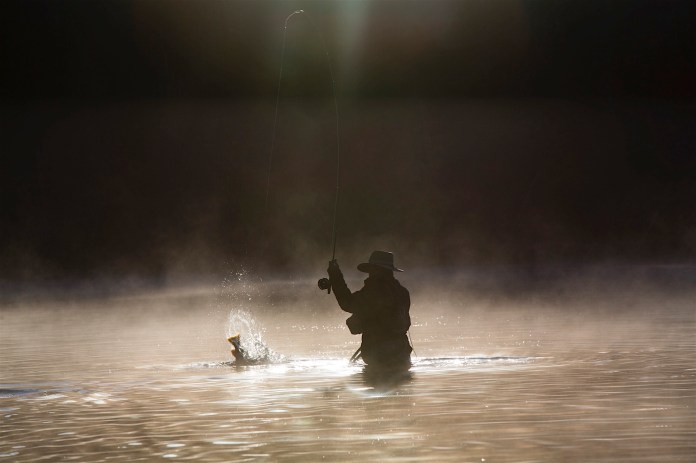
Fly fishing the Yellowstone River

Well, I guess serious anglers wake up early.

And Yellowstone is one of those iconic places to fly fish, so I always enjoy getting images of people catching fish in this beautiful place.
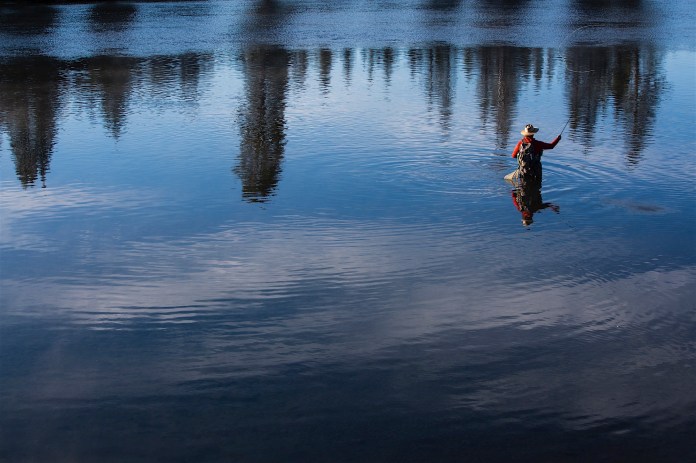
Fly fishing the Yellowstone River

We worked our way up to the northeast corner of Yellowstone, my favorite area of the park. The Lamar Valley, Cooke City, and the Beartooth/ Absaroka… doesn’t get much better.

We parked the trailer off the grid, outside of Cooke City, Montana and set off to explore.

I drove into the Lamar Valley most morning and evenings, and we hiked trails all along the Beartooth Highway during the day.
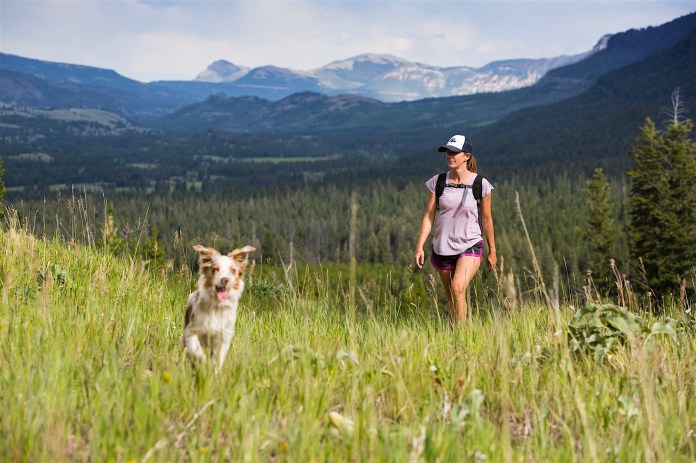
A woman and her dog hike Pilot Creek in the Absaroka Beartooths

Islay and Ellen clearly had a blast exploring a new area. I have been coming here for years, but Ellen had never been.
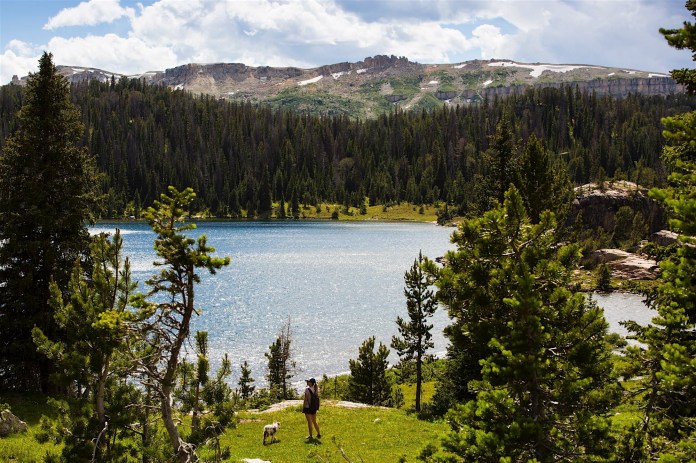
A woman and her dog overlooking Beauty Lake in the Beartooths

23. Sharing our special places with the people we love makes those places even more special.
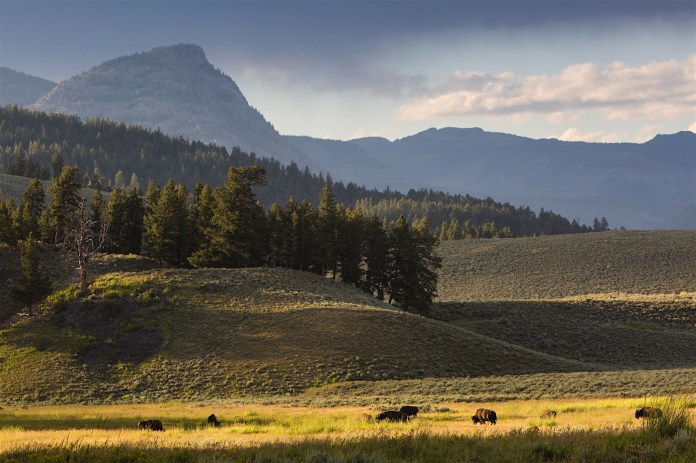
Bison roaming in the Lamar Valley

The Beartooth Highway is perhaps my favorite drive in the whole world. It is called “America’s most scenic highway,” and I have yet to find anything to beat it.

It snakes its way back and forth across the border, Wyoming to Montana, Montana back to Wyoming, Wyoming back to Montana. You begin to forget which state you’re in.
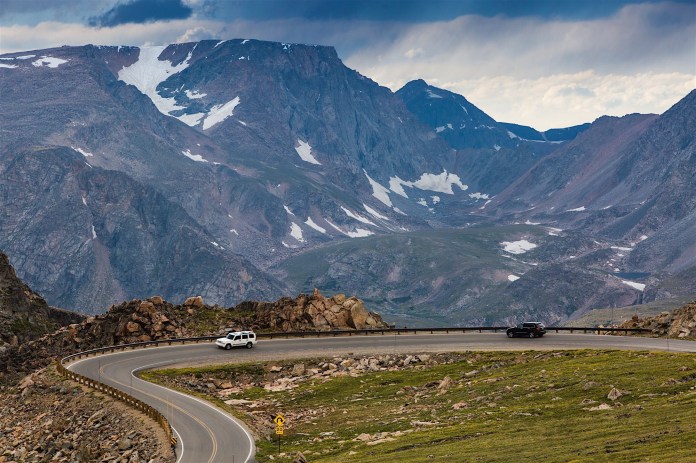
The Beartooth Highway, Americas most scenic drive

The Beartooth Highway, Americas most scenic drive

The Absaroka and Beartooth mountains are just stunning.
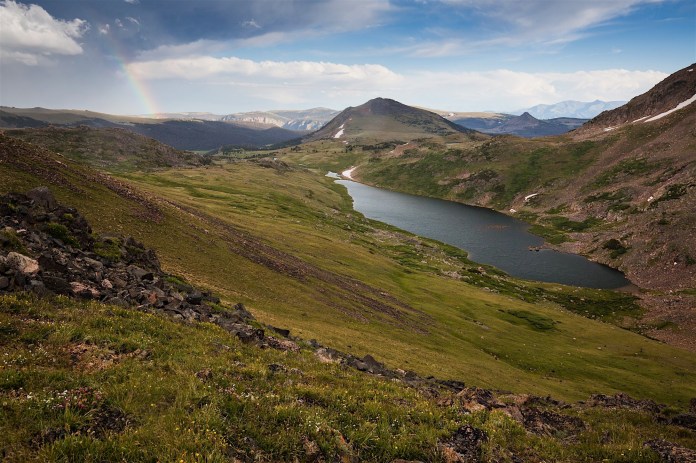
The Beartooth Highway, Americas most scenic drive

And there are such amazing little side roads to explore and trails to get out, deep into the wilderness.

We could easily spend the whole summer and fall right here.
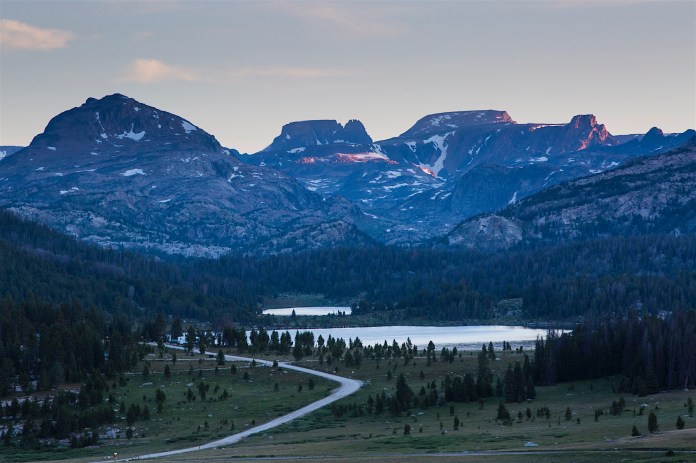
The Beartooths

But Glacier was calling.

See, I’ve been itching to go to Glacier National Park, and as a consequence, planning a trip every single year for the last decade. And every single year in the last decade, my trip has been canceled. For various reasons, but the fact remained; I’ve still never been to Glacier.

Nothing was stopping us this summer.

ARS_GNP_20160722_6451

We arrived and I’m so glad we finally had the chance to visit. I wrote a blog post just on that trip, so I’ll spare you the doubling up on the same stories. If you’d like to read more about our time in Glacier, check it out here.
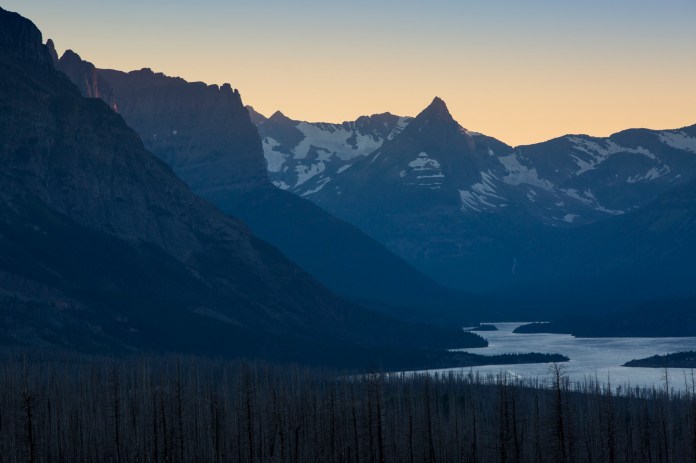
ARS_GNP_20160724_6905

After Glacier, I had a private workshop down in Teton, so we made the trek back down.

It was really great. A young photographer whom I’ve known for a few years wanted to sit down with me and her assistant and basically have a no-holds-barred Q+A.

I prepared an outline that we followed much of the time, based on what I knew she wanted to learn. But ultimately, she asked every question she could think of, from the business and marketing side of things, to planning, scouting, shooting, and workflow.

We had a blast. And she and her assistant left inspired and refreshed to get out there and follow their dreams! Or at least, that’s what they said.

I felt so honored to be able to give them encouragement.
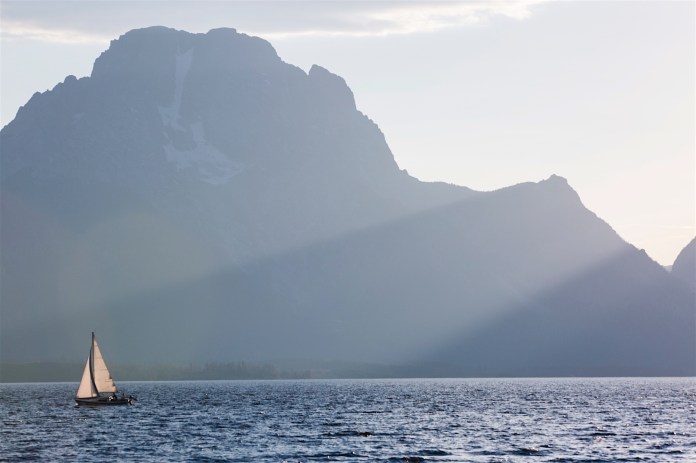
Sunset over Jackson Lake near Signal Mountain Lodge

And we couldn’t do a full-day’s workshop without getting out to shoot! So we ended the perfect day with a perfect Teton sunset shoot.
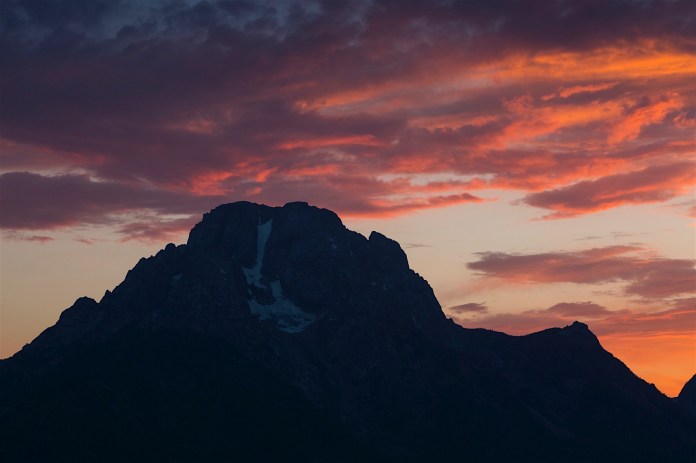
Sunset over Jackson Lake near Signal Mountain Lodge

24. I obviously have to make a living, but if I can make money while helping people, I have had an incredibly good day.
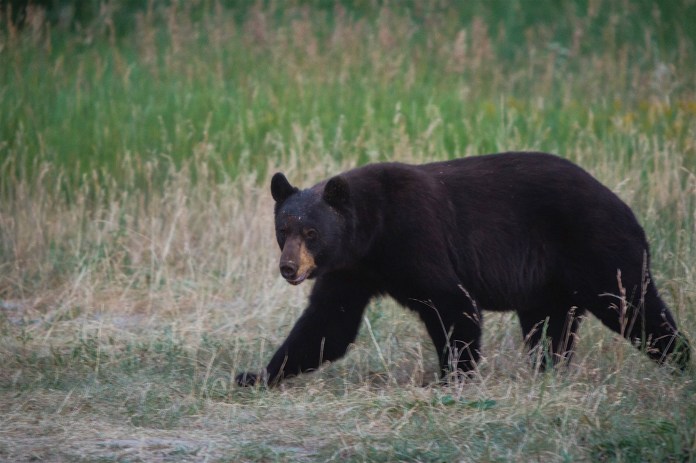
A large black bear near Pacific Creek in Teton National Forest

The next evening, I could tell the light and clouds weren’t going to do what I wanted for a landscape shoot, so I went for another wildlife drive.

Well, I decided to go back to the same place I had my grizzly experience… which by the way, almost never works – lightning almost never strikes twice. But I went anyway. And what should I find? A big, healthy black bear. About 20 feet from my truck!

He didn’t stick around too long, but it was still the end to a great day/ week.

25. Lightning sometimes does strike twice.
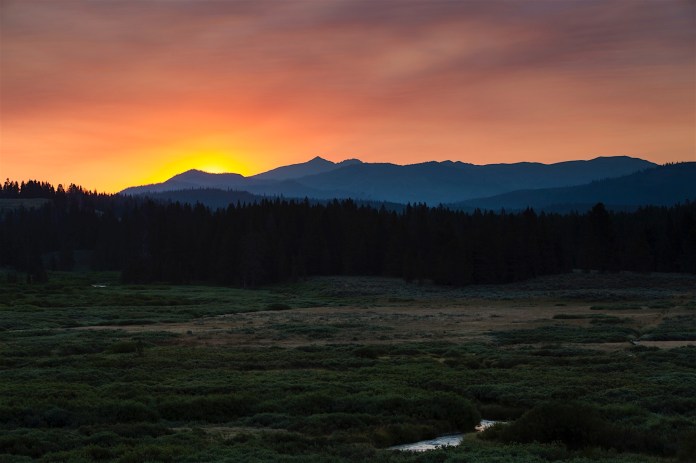
Sunrise over the Gallatin River and the far Northwest corner of Yellowstone

About a year ago I did a deal with a guy in California who wanted to start a Chinese photography workshop/ tour company. He was going to tap in to the growing market of Chinese middle class that love travel, photography, and U.S. National Parks, and I was going to lead tours through Wyoming, and more specifically, Yellowstone.

So the time had come for me to do my first tour through Yellowstone with tourists from China.

We headed back up to Yellowstone, and made our home-base Lake Hebgen near West Yellowstone.

I didn’t know what to expect.

Often times the cultural and language differences are enough to make for really difficult trips.

But as often is the case, my fears and worries were immediately diminished when I met the group for the first time.

26. Fears rarely, if ever, reflect reality.

Tourists at Turquise Pool at dawn

Flowers and the Firehole River at Grand Prismatic

They were excited and respectful. They listened to me, learned about the park and its wildlife, and we all had a great time.

I showed them all around Yellowstone, a place I do consider very near and dear to me.

Black Pool in the West Thumb Geyser Basin

We spent four full days together seeing the regular tourist sights, and even visiting a few of my “secret” spots.

And on the last day… the icing on the cake. A sight so rare on this big earth, that I couldn’t believe what we were witnessing it.
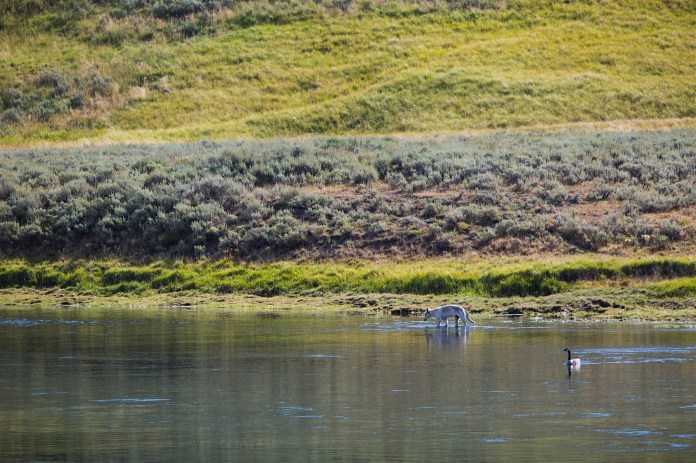
The Wapiti Pack along the Yellowstone River in the Hayden Valley

A crowd was forming on the side of the road near the Yellowstone River, so we pulled over. Just across the river a stark, white wolf came over a hill and dropped into view. She went down to the river for a drink.

She was beautiful.

In all the times I’ve been to Yellowstone, I’ve only seen two wolves.

Now, I know you can spot them a mile off if you sit long enough in the Hayden or Lamar Valleys. So when I say I’ve “seen” a wolf, I mean one that I was close enough to observe well with the naked eye.

This was the third. And then the fourth, and fifth, and sixth. In all, we saw four wolves, that we were told were part of the Wapiti Lake Pack.

And the ranger told of us of a rare soap opera drama that was unfolding with this particular pack.

You see, there was an old male that was the alpha. But a few weeks back, two young males had come in to the pack and run off the old male. So his female became the alpha. She seemed to enjoy having the young males around and her old alpha gone.

Well, no one had ever observed this behavior in wolves before now. When the young males would go off to hunt, the old alpha would find his way back to the pack. He had pups with the alpha female, and he wanted his visitation rights. Rangers observed that the old alpha would stick around to watch over the pups until the younger males would return. He would then leave the pack again to roam alone. And back and forth this went.

It very well may be the animal kingdom’s first observed instance of a civil divorce with custody agreement.

27. Even animals are drama queens.
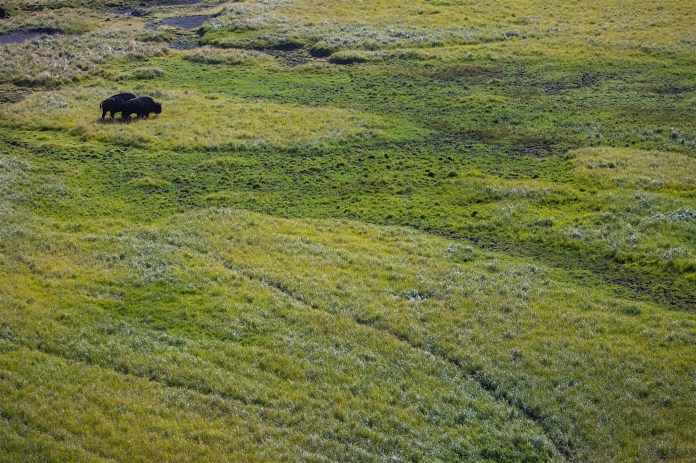
Bison in the Hayden Valley

We were all reeling from the unique experience. But the tour was ending.

I was so worried that the cultural differences would keep me from being able to connect with the group. And I was so wrong. I actually made friends with everyone in the group and it was tough to see them go.

28. When fear changes to friendship, our eyes are opened to the similarities between people, not just the differences.

It was great to end on such a high note, and I really enjoyed my time with the group. But I was exhausted from the four days of waking at 4AM to drive 2 hours to get to our meeting point, then leading the group until dinner, and driving the 2 hours back to the trailer to be with Ellen.

So the next few days, I crashed.

29. The best way to get a good night’s sleep is to work your butt off during the day.

— Andrew


Ellen and I have hit the road full-time! Help us on our mission to inspire and educate everyone on the importance of getting outside by checking out my workshops and my prints, made #ontheroad in my mobile print studio. The revenue will help propel us further and further on this great adventure. Enrich yourself and others… and feel great about it too as you’re helping to ensure our wild lands are cherished and to keep the wild spirit of the American Dream alive. Our goal is to visit all 59 National Parks in 2-4 years. LEARN MORE ABOUT WHAT WE’RE DOING HERE


Want to learn photography and enjoy a guided experience? Check out my exciting, NEW workshop dates:
 
TELLURIDE // LANDSCAPE + MOUNTAIN LIGHT // 2016 – SOLD OUT
TELLURIDE // LANDSCAPE + MOUNTAIN LIGHT (Trip 2) // 2016 – ONLY 2 SPOTS AVAILABLE
LOCAL + PRIVATE WORKSHOP // 2016 – AFFORDABLE RATES FOR ME TO COME TO YOU
BIG BEND // LANDSCAPE + NIGHT SKY // 2017 – MOST POPULAR! 6 SPOTS AVAILABLE
LEARN PHOTO + CAMERA BASICS // DALLAS // 2016 – 20 SPOTS!
 
I’m excited to announce my “The Photographic Guide to Our National Parks” series of eBooks:
 
See what’s NEW
 
If you are interested in purchasing a “print from the road”, please check my prints for sale, or email me directly for a custom request:
 
Andrew R. Slaton | photographer // prints
 
If you are interested in licensing any of the images/ video from this post, please visit my stock agency:
 
Tandem Stills + Motion // Andrew R. Slaton
Image Brief // Andrew R. Slaton
  
For assignment work requests, please email me: andrew@andrewslatonphoto.com
 
Thanks for visiting AndrewSlatonBlog.com!
 
all images and content © ARS Media, LLC 2016
Standard
random thought, travel

The First 10,000 Miles

What I Learned From Life On The Road (Part 1)

Livin’ on the road, my friend, was gonna keep you free and clean. Now you wear your skin like iron, and your breath’s as hard as kerosene.” — Pancho and Lefty, Townes Van Zandt

When we set off in June, we didn’t really know what to expect… the stories, the landscapes, the people… the many, varied obstacles.

10,000 miles in, here we are; unscathed… relatively speaking, a little dustier, skinnier. Perhaps wiser, happier? Hindsight will be the judge.

The following are the first 10k miles in pictures and short stories, and what I’ve learned so far from life on the road…

The famous West Texas sunrise

We left Texas in early June, 2016 with great anticipation for the adventure before us. Besides our family and friends, the only thing left in the Lone Star State was a 75 square foot storage unit half full of our stuff. What I learned somewhere along the way in the first 10,000 is that 75 square feet is way too much.

Lesson 1. The less stuff you have, the less stuff begins to mean to you.

ARS_CCSP_20160605_0316

Our new Australian Shepherd pup, Islay (named after our favorite, peaty whisky soaked island in Scotland) was along for the ride. Living in our 200 square foot trailer with us and Colonel Bubba the cat. She is growing and learning and playing with every new mile.

She has slowly become the perfect dog for which we could’ve ever asked… you’ll see later.

2. Finding the right dog for you is nearly just as good as finding the right person.

ARS_GSDNP_160609_0982

We finally hit the mountains in record (slow) time. I’m not used to pulling a 6,000 lb. trailer and having to go 60mph. But we made it to Great Sand Dunes National Park regardless. Our first National Park of the 2-3 year 59 Park tour! We’ve been to GSDNP many times, so it felt like an old familiar friend welcoming us to this new way of life.

3. Old familiar friends are always a welcomed sight for the weary traveler.

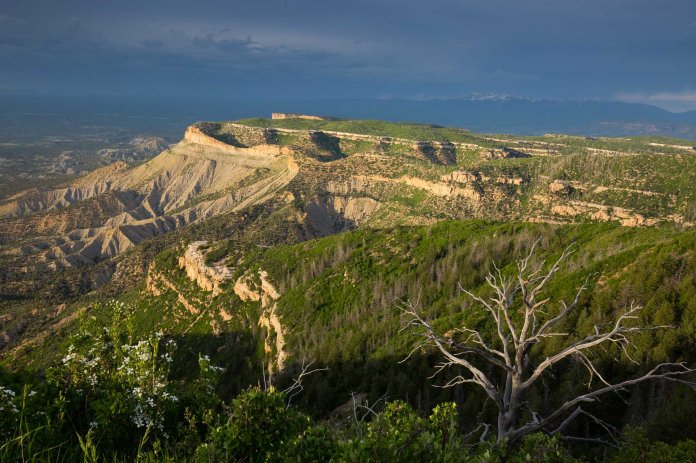
ARS_MVNP_160609_1045

Our first new Park, and 2nd overall was Mesa Verde. And so far, it has been the biggest shocker. We expected nothing from this relatively small National Park, and it really surprised us with its beauty and mystery.

4. No amount of familiarity can ever take the place of a new experience.

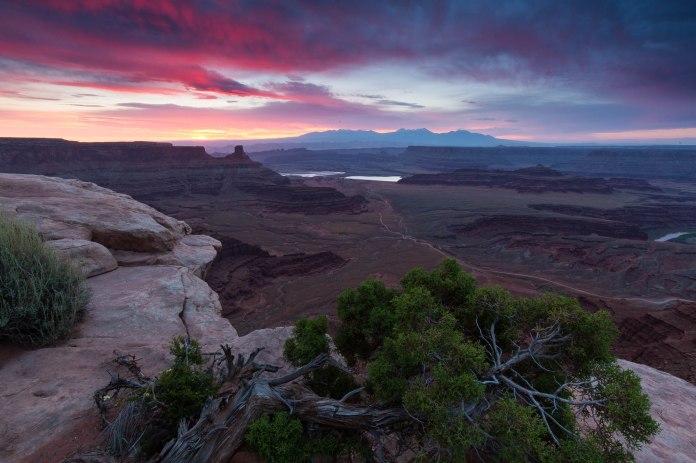
ARS_DHPSP_160611_1187

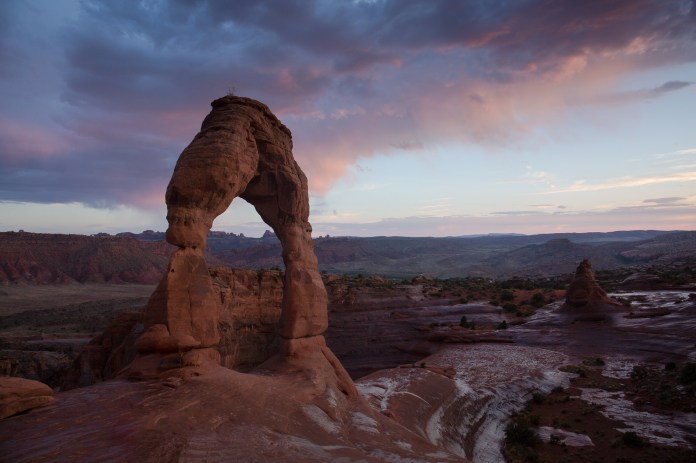
We didn’t have long to stay though. It was on to National Parks 3 and 4, Canyonlands and Arches in Utah.

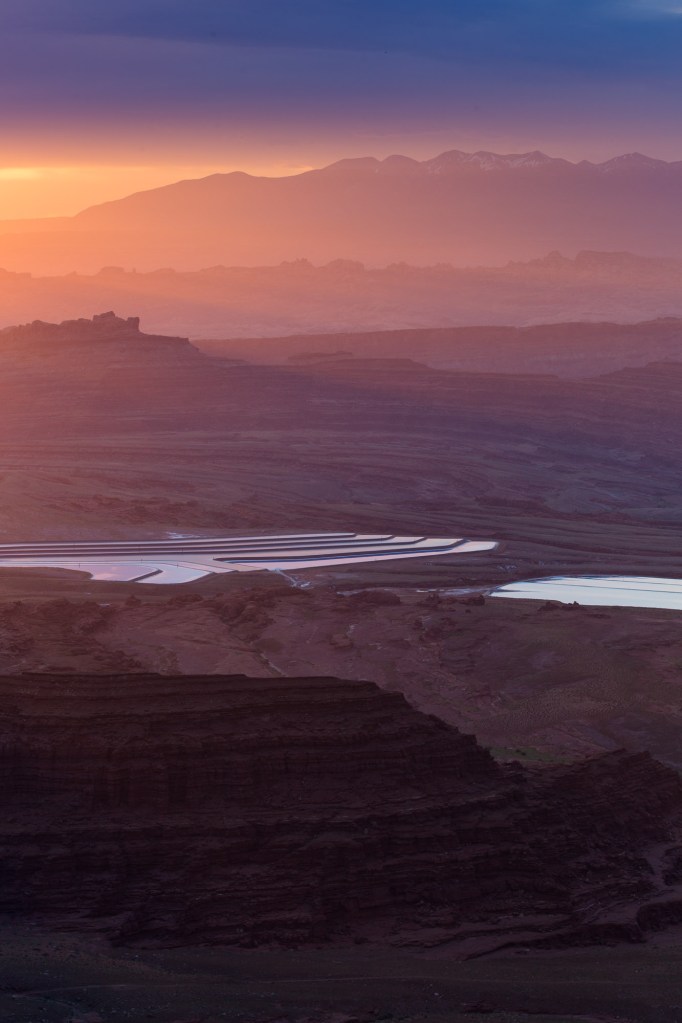
ARS_DHPSP_160611_1217

ARS_DHPSP_160611_1224

These two Parks are pretty spectacular, and basically right across the highway from each other. Pretty awe-inspiring and convenient.

5. Inspiration rarely knows convenience. But when it does…. oh boy, hold on.

ARS_ARCHESNP_160611_1556

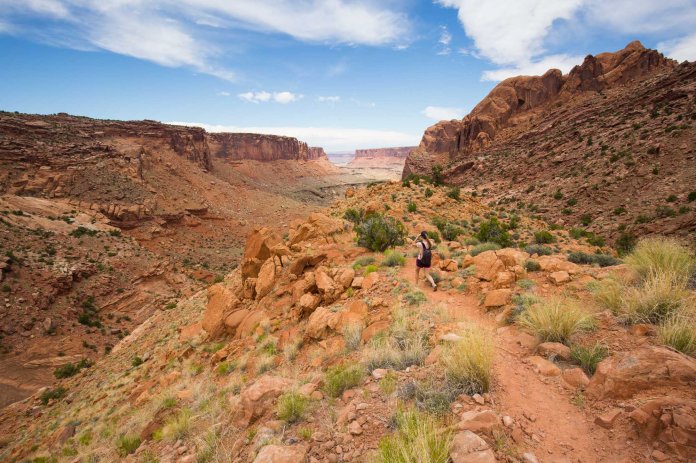
We started to get our “hiking legs” under us on this portion of the trip. I’m really glad we did too, because by the end of the summer we would’ve logged more than 300 trail miles from Texas all the way to Montana’s border with Canada.

The heat of canyon country sped the whole process along. 3-4 mile days quickly became 8-12 mile days as we worked our way up to the cooler mountain temps. All the while, we were dropping unnecessary pounds.

6. Hiking every day is the best way to stay in the best shape of your life. No pricey gym membership needed.

ARS_CNP_20160613_1740

When we finally arrived at our “home away from home”, the Wind River Range welcomed us with open arms. Pinedale is the town in which I lived in 2005, and the place got in my blood. I’ve visited at least once or twice every year since I moved back to Texas, some years making the 20+ hour drive 4 times.

It would now be our home base for the Summer and Fall. I had workshops slated to happen in the surrounding areas, and we both really wanted to get out deep into the Winds, so it was the perfect “base camp”.

ARS_WY_160616_1866

Soda Lake was our first “off the grid” experience. If you’re unfamiliar with what that means, it’s basically just car camping, but with four walls, a bed, a toilet, a refrigerator, and a limited supply of running water. Not too shabby really.

Ellen and I have been primitive camping all of our lives, so this was an absolute luxury.

And to look out our window and see a scene that I frequently had to travel very long distances to see… well, that proved to be priceless.

7. A spectacular view each morning has an uncanny ability to lift the spirits.

ARS_WY_160617_2141

Hanging around Soda the first week was a great reintroduction to the mountain life. Every morning I would get up before dawn to watch the sun rise over the Winds. Every evening, we would enjoy our “dinner with a view”, play a game of dominoes or cards outside, and then I would go chase the sun’s last rays. Life slowed down to the basics.

ARS_WY_160618_2206

ARS_WY_160619_1009

During the day, our hikes grew longer and more challenging, taking us deeper into the Winds.

We headed out to one of our favorite places in the world, the Upper Green River Valley. The area is unique as it is the confluence of two ranges within the Rockies, the Gros Ventre and the Winds. grizzlies, wolves, elk, moose, eagles, antelope, and so much more call this dramatic landscape home. And we did too.

ars_wy_160626_2909

ARS_WY_160624_2616

We had the time to explore new trails and scenery.

Islay was becoming quite the mountain dog, learning to cross dangerously swift rivers and creeks, negotiating boulders, swimming in high, clear mountain lakes with her crazy parents.

ARS_WY_160624_2699

8. Nothing can prepare you for both the terror and delight of the breath takingly cold experience of submerging yourself in a mountain lake. 

ARS_WY_160625_1201

I spent my mornings scouring the area for wildlife. And I had some luck.

ARS_WY_160625_1286

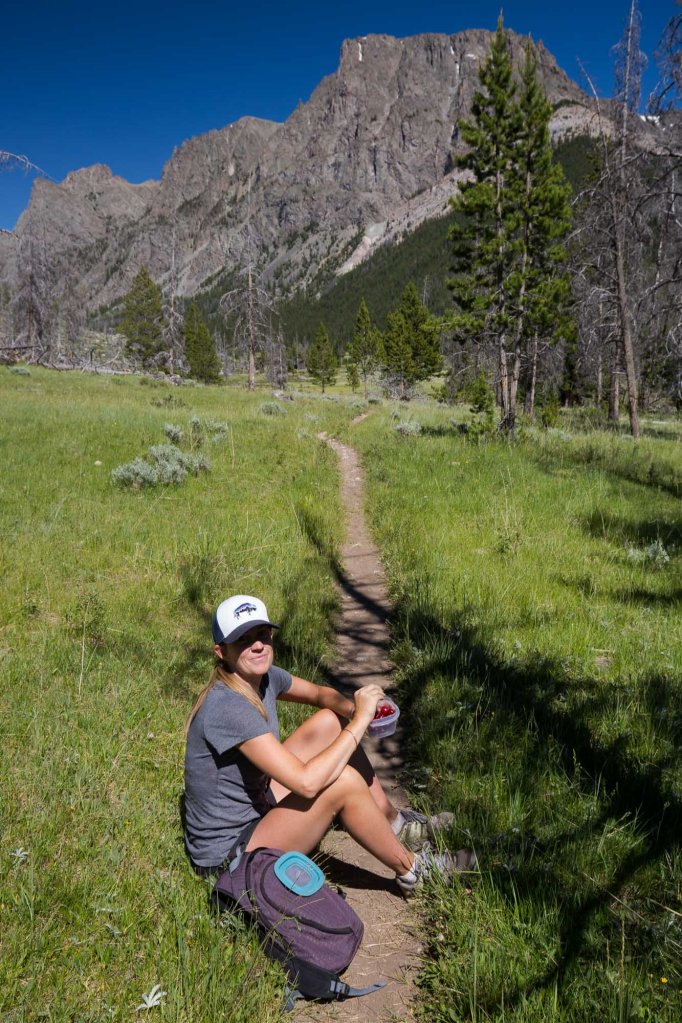
From the Green River Lakes trailhead, we found many of our favorite hikes. And our favorite trail snack.

ars_wy_160626_2885

9. When in season, cherries pack the best punch of flavor and immediate energy on the trail.

We learned quickly how long our water (fresh, grey, and black) tanks and batteries could last… 4-5 days. There’s also no cell reception for 40 miles at our spot in the Upper Green. So it was time to “plug in” and reconnect with the world. We had reached our limits.

We found a little no-frills RV park near Pinedale that was part of a network we could join. For $150 a year, we joined the club, named this as our “home park” and could now stay for free, as much as we like, for the rest of the year. No electric, water, sewer bills… just free “on the grid” camping any time we needed it. All the other hundreds of RV parks across the US and Canada in this network are just $10-15 per night for us too. Best $150 we’ve spent so far.

So we plugged in and found new roads and trails to explore in the southern reaches of the Winds.

ars_wy_160627_1311

ars_wy_160628_3051

Since we could now stay plugged in for free, we knew it was a good time to do an extended backpacking trip into the Winds. 4 nights, 5 days of carrying everything needed on your back, sleeping underneath a blanket of stars, and being a part of the landscape.

So we left Gertie (the trailer) plugged in at our new “home park”, put a ton of cat food out for Colonel Bubba, and hit the trail, just in time to celebrate Independence Day. Fitting, I thought.

10. There is no better (or often more painful) way to see and experience the beauty and majesty of wilderness than on foot.

ars_wy_160704_3272

We hit Elkhart Park early and headed straight in for Seneca Lake, smack dab in the middle of the Winds. I’ve been wanting to do this trip for a decade… the infamous Titcomb Basin.

It was a moderate 8-9 miles in to Seneca the first day. Islay did amazingly well. This was her first backpacking trip, and though she’s too young to carry anything yet, she ran at least 2-3 miles for every one we did. She got to be off-leash the whole time, and she never strayed too far or got into too much trouble, and she got to sleep with us in the tent. Now this was a pretty big deal considering she’s slept in her crate every night of her life up to that point.

ars_wy_160704_3302

We made it to Seneca and set up camp. It was a beautiful spot.

ars_wy_160704_3311

ars_wy_160704_3321

But we did realize one important thing from that first day of hiking… our backpacks and shoes were way out-dated. It was going to be a painful trip.

11. The right gear is essential to a comfortable mountain backpacking experience.

I’ve known this truth deep down all my life, but I’d never done multiple extended trips so close together to really understand how important the right gear can be. We’ve also just never had the extra cash to throw at the problem. There’s always something else more pressing or important, and I don’t know if you’ve been in an REI lately, but outdoor gear is expensive!

ars_wy_160705_3744

No amount of pain at this point though was going to stop us or dampen our spirits.

12. Pain is mostly mental.

ARS_WY_160705_3807

The Titcomb Basin has been called one of the most beautiful and striking places in the world. I couldn’t disagree at all. We did’t get the best weather for photography, but it was spectacular none-the-less.

ARS_WY_160705_3926

ARS_WY_160705_4408

ARS_WY_160706_4450

Our bond grew incredibly deep on this adventure with Islay. She would wake early with me and “assist” me as I shot sunrise. During the day, she would explore right beside us.

ARS_WY_160706_4552

ARS_WY_160706_4786

ARS_WY_160706_4854

It was perhaps here, in the Titcomb Basin, that Islay Blue became a real part of our family.

I’ve never been “that dog person”. Don’t get me wrong, I’ve always loved dogs, but I never treated them like a member of the family. Well… here I am… one of “them”. Islay has become an indispensable part of our family. And all it took was a few thousand miles sitting on the center console of the truck, her quirky personality, hilarious morning antics, a few near-death experiences, and a wilderness excursion for the ages.

Ask Ellen, I’ve become a total softy when it comes to that dog. She freaking gets away with murder when she’s with me.

13. Dog people have it all figured out. :)

… to be continued…

ARS_WY_160706_5018

— Andrew


Ellen and I have hit the road full-time! We are on a mission to inspire and educate everyone on the importance of getting outside. Check out my workshops and my prints, made #ontheroad in my mobile print studio. The revenue will help propel us further and further on this great adventure. Enrich yourself and others… and feel great about it too as you’re helping to ensure our wild lands are cherished and to keep the wild spirit of the American Dream alive. Our goal is to visit all 59 National Parks in 2-4 years. LEARN MORE ABOUT WHAT WE’RE DOING HERE


Want to learn photography and enjoy a guided experience? Check out my exciting, NEW workshop dates:
 
TELLURIDE // LANDSCAPE + MOUNTAIN LIGHT // 2016 – SOLD OUT
TELLURIDE // LANDSCAPE + MOUNTAIN LIGHT (Trip 2) // 2016 – ONLY 2 SPOTS AVAILABLE
LOCAL + PRIVATE WORKSHOP // 2016 – AFFORDABLE RATES FOR ME TO COME TO YOU
BIG BEND // LANDSCAPE + NIGHT SKY // 2017 – MOST POPULAR! 6 SPOTS AVAILABLE
LEARN PHOTO + CAMERA BASICS // DALLAS // 2016 – 20 SPOTS!
 
I’m excited to announce my “The Photographic Guide to Our National Parks” series of eBooks:
 
See what’s NEW + download your free Rocky Mountain National Park sample when it releases!
 
If you are interested in purchasing a “print from the road”, please check my prints for sale, or email me directly for a custom request:
 
Andrew R. Slaton | photographer // prints
 
If you are interested in licensing any of the images/ video from this post, please visit my stock agency:
 
Tandem Stills + Motion // Andrew R. Slaton
Image Brief // Andrew R. Slaton
  
For assignment work requests, please email me: andrew@andrewslatonphoto.com
 
Thanks for visiting AndrewSlatonBlog.com
 
all images and content © ARS Media, LLC 2016
Standard
random thought, wildlife

Delisting Grizzlies | Ensuring A Species’ Survival

The Endangered Species Act (ESA) is intended to lead to recovery and delisting, so long as adequate plans exist to assure recovery continues.

The ESA requires that the U.S. Fish and Wildlife Service prepare a recovery plan for species that are listed as threatened or endangered. For many years now, all of the recovery criteria established for Yellowstone grizzlies have been met or exceeded.”

— The National Wildlife Federation

Let me first state a fact: I am not a hunter. Nor do I have any desire to ever hunt bears, for any reason. I love bears more than any other creature on this planet… second only to dogs and (possibly) humans. I deeply care about their survival. And as a consequence, I have thought much about and researched extensively the best paths to ensuring their survival in the lower 48.

IMG_7989

But let me be clear; I am not an environmentalist. I am a conservationist. The former, I believe, is responsible for gross mismanagement of our wild places for far too long and leads to a mentality of “playing God” in places like Yellowstone.

Even though I personally do not hunt, I respect those that do. Especially and specifically when they responsibly use the whole animal for meat, clothing, etc. But there are a few other purposes that hunting serves, that many of us city-folk and academic types forget; non-human species are safer when they maintain a healthy fear of humans, and we humans, as the apex of all apex predators, are tasked with managing and keeping animal populations healthy. And sometimes that includes hunting for culling purposes.

According to Nick Gevock, an opinion columnist for High Country News, “It is true that such management might well include hunting… look at the remarkable track record of species that are currently hunted: Nearly every species of wildlife that hunters value has thrived in our country, and with sound scientific management, grizzlies can do the same, and even grow in both numbers and range. It’s difficult for many non-hunters to understand, but it’s a solution that works in Alaska with brown bears and can work in the Lower 48 as well.” He goes on to cite a study conducted by the Alaska Department of Fish and Game, “In fact, a study of four brown bear populations in Alaska — two populations in national parks that were not hunted and two adjoining populations that are — found that the hunted bears had larger litter sizes and better cub survival.”

IMG_7980

I find trophy hunting wasteful. On a personal level, I do not understand the appeal. But let’s look at the facts:

1. Hunters are typically some of the best conservationists on the planet.The US Fish & Wildlife Services states “The sale of hunting licenses, tags, and stamps is the primary source of funding for most state wildlife conservation efforts.” It goes on to say, “By respecting seasons and limits, purchasing all required licenses, and paying federal excise taxes on hunting equipment and ammunition, individual hunters make a big contribution towards ensuring the future of many species of wildlife and habitat for the future. By paying the Federal excise tax on hunting equipment, hunters are contributing hundreds of millions of dollars for conservation programs that benefit many wildlife species, both hunted and non- hunted. Each year, nearly $200 million in hunters’ federal excise taxes are distributed to State agencies to support wildlife management programs, the purchase of lands open to hunters, and hunter education and safety classes.” But more than just their tax dollars speaking loudly, hunters are also members of “local hunting clubs and national conservation organizations work to protect the future of wildlife by setting aside thousands of acres of habitat and speaking up for conservation in our national and state capitals.”

2. Hunting is very big business. According to the California Department of Fish and Wildlife “Hunting is much more than a traditional American pastime. It creates more than 700,000 jobs nationwide. New studies now show that annual spending by America’s 14 million hunters amounts to $22.1 billion. By comparison, and if hypothetically ranked as a ‘corporation,’ that revenue figure would put hunting in thirty-fifth place on the Fortune 500 list of America’s largest businesses, right between J.C. Penney and United Parcel Service.” This pumps much needed resources directly into local economies and important conservation/ research efforts. So whether you agree with hunting or not, it is a vitally important part of the conservation economy.

3. Humans are an important species within the world ecosystems. Environmentalism paints the picture that humans are the main problem with the environment, which in some respects may hold some truth. However, the movement is largely based on the mediocracy principle, essentially stating that humans are mediocre and no more special, exceptional, or superior to any other species. The movement has many well-meaning individuals who truly care about the natural world, but unfortunately this whole premise is flawed. Clearly humans are the dominant species, and I could argue are quite exceptional, special, and superior. This does not mean we are the “center of the universe” or the only species that matters, or that we should destroy the planet or leave other species decimated. It is not an either/ or. Therein lies the biggest fallacy. To many environmentalists, the choice is either to be on the side that is hell bent on destruction, or to consider ourselves no different from a dung beetle and therefore refuse logic and common sense policies. There is middle ground. It is called stewardship and conservation.

4. The Greater Yellowstone ecosystem includes a massive swath of land (nearly 6 million acres) that is much more than just Grand Teton and Yellowstone National Parks. Ranchers and others’ livelihoods depend on the bear’s fear of human conflict. They no longer fear people. A study in the 1990’s by Jon Swenson, Department of Biology and Nature Conservation at The Agricultural University of Norway (to read the full study, click here) observes in general that bears are more likely to avoid humans in areas where they are hunted than where they are fully protected. What makes things complicated is the availability of food when humans are present. Food storage and proper disposal is still a major issue in bear areas, regardless of hunting. A major rebuttal to the argument that hunting creates more fear in bears of humans is that there is no scientific evidence to support this claim. However, there is quite a lot of observational evidence dating all the way back to the 16th century in Eurasia to support the assertion, and so far, none to suggest that bears would somehow fear humans less or the same from if hunted. The responsibility is on us to be realistic, finding a way to coexist with less human-bear conflict which in the long run will help protect the species.

5. After delisting, grizzly bears will remain protected in the 3 National Parks they call home, and under special regulations in the surrounding states’ National Forests and designated Wilderness Areas. Hunting seasons and quotas will be limited and determined by biologists and conservationists projections, updated yearly to reflect proper wildlife management, just as they do with elk, deer, moose, black bear, big horn sheep, etc.

Anyone who spends much time in grizzly country, especially hunters, know that an unfortunately large segment of these bears have grown to associate humans with easy food. When an elk hunter fires his rifle in grizzly country, he/ she knows that it is only a matter of time before a bear will show up. This is potentially the exact opposite of what we might have after a few generations of bears that experience being the prey of (now) predator humans. They will try to get as far away from gunshots as possible. See the aforementioned Swenson Study.

This very simple fact could save dozens of bears lives every year that otherwise would get into conflicts with humans because they lack any fear of us. And we all know that the bear loses when it gets into human conflict. Protocol is usually to relocate the “problem” bear first, or to dispatch (kill) it. The fact is, the government killed 31 grizzly bears in 2015, for various reasons, mostly due to human-bear conflict. Could these numbers be lower (or at least the same) with the introduction of a very limited-tag trophy hunt scenario?

ARS_WY_0710_0031

According to Chris Servheen, Grizzly Bear Recovery Coordinator for the U.S. Fish and Wildlife Service (USFWS), “the bears have met every criteria set in a recovery plan to have them removed from the Endangered Species List, or ‘delisted.'” If delisted, grizzlies would no longer be protected under the stricter Endangered Species Act (ESA) regulations, and would be managed by the six surrounding National Forests and to the states of Idaho, Montana, and Wyoming. The populations inside Grand Teton, Yellowstone, and Glacier National Parks would still be highly protected and managed by the National Park Service. If you would like to read the entire ESA, it is available as a pdf here.

Defenders of Wildlife, an organization who “is dedicated to the protection of all native animals and plants in their natural communities,” states, “Today, there are an estimated 1,800 grizzly bears remaining in five populations in the lower 48 states. Most of these bears are located in the Northern Continental Divide Population (including Glacier National Park) and the Yellowstone Population.” That includes the conservative estimate of 700+ in the Greater Yellowstone area.

Many conservation biologists argue against delisting, stating that it isn’t enough to protect grizzly bears if their habitat isn’t protected as well. Servheen counters that “the Service looks at more than raw numbers for delisting, including the present or threatened destruction or curtailment of bear habitat or range; overuse of habitat for commercial, recreational, scientific or educational purposes; disease or predation; the lack or inadequacy of regulations; and other natural or manmade factors affecting the population’s continued existence.”

“The key to success is adaptive management,” said Servheen. “As conditions and the needs of the bears change over time, management can change to address those needs,” he said. “I’m optimistic that the bears will be around for hundreds of years. All three state plans are good,” Servheen said, “and don’t have the political problems that have afflicted the ESA delisting plan for wolves.”

IMG_7986

So what does all of this mean for these magnificent bears? Well, it means great news; grizzly bears in the lower 48 have made a remarkable recovery, thanks to the Endangered Species Act. It is a “huge conservation success story“, But it doesn’t mean they are out of the proverbial “woods.”

The states of Montana, Idaho, and Wyoming have already stepped up to create comprehensive plans to manage the grizzly bear populations and to protect them from a return to the ‘threatened’ status. What this all comes down to is ensuring that bears have adequate and sufficient habitat within which to roam and avoid dangerous human contact.

I simply want to start a dialogue here that is somewhere in between the two extremes. Anyone can say what they want about me, but my main concern is the great bear’s long term survival, and to me, that means less human-bear conflict.

From where I stand, I see two main groups that are on polar opposite sides, unwilling to meet somewhere in the middle to find a balance between what is right and good for bears, and what is reasonable and fair for humans. It doesn’t have to be that way. It is possible to ensure the survival (and thriving) of this magnificent creature, all the while, managing it’s territory and population to ensure the safety and livelihood of the people who live within the massive boundaries of the Greater Yellowstone Ecosystem.

I readily admit that I do not have all the answers. Neither do you or anyone else, but I invite you to share your thoughts and feelings here, in hopes that we can come to understand each other and work toward a common goal: protecting a true symbol of the wild, and maintaining a healthy grizzly bear population, for generations to come.

— Andrew


Ellen and I have hit the road full-time! Help us on our mission to inspire and educate everyone on the importance of getting outside by checking out my workshops and my prints, made #ontheroad in my mobile print studio. The revenue will help propel us further and further on this great adventure. Enrich yourself and others… and feel great about it too as you’re helping to ensure our wild lands are cherished and to keep the wild spirit of the American Dream alive. Our goal is to visit all 59 National Parks in 2-4 years. LEARN MORE ABOUT WHAT WE’RE DOING HERE


Want to learn photography and enjoy a guided experience? Check out my exciting, NEW workshop dates:
 
TELLURIDE // LANDSCAPE + MOUNTAIN LIGHT // 2016 – SOLD OUT
TELLURIDE // LANDSCAPE + MOUNTAIN LIGHT (Trip 2) // 2016 – ONLY 2 SPOTS AVAILABLE
LOCAL + PRIVATE WORKSHOP // 2016 – AFFORDABLE RATES FOR ME TO COME TO YOU
BIG BEND // LANDSCAPE + NIGHT SKY // 2017 – MOST POPULAR! 6 SPOTS AVAILABLE
LEARN PHOTO + CAMERA BASICS // DALLAS // 2016 – 20 SPOTS!
 
I’m excited to announce my “The Photographic Guide to Our National Parks” series of eBooks:
 
See what’s NEW
 
If you are interested in purchasing a “print from the road”, please check my prints for sale, or email me directly for a custom request:
 
Andrew R. Slaton | photographer // prints
 
If you are interested in licensing any of the images/ video from this post, please visit my stock agency:
 
Tandem Stills + Motion // Andrew R. Slaton
Image Brief // Andrew R. Slaton
  
For assignment work requests, please email me: andrew@andrewslatonphoto.com
 
Thanks for visiting AndrewSlatonBlog.com!
 
all images and content © ARS Media, LLC 2016
Standard